
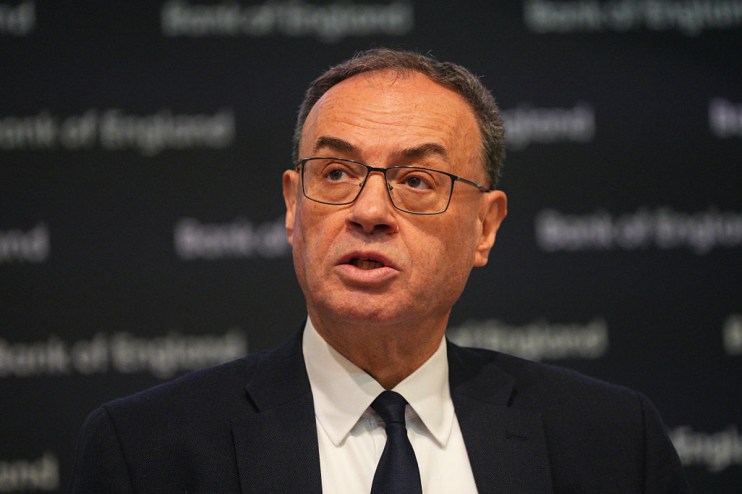
The Bank of England’s Andrew Bailey has ruled out the prospect of any interest rate cuts in the near future, warning that the sustained conflict in the Middle East constitutes a major shock to energy supply that could leave long-term scars on the British economy.
In an interview with LBC set to air on Thursday evening, the governor of Britain’s central bank said previous signals that the Monetary Policy Committee would continue to reduce its headline interest rate through this year were no longer the case, and that the “message has changed” in the wake of the cuts.
“You can take what we’ve said today as the prediction of cuts… is not on the horizon as a whole,” he told LBC’s Andrew Marr, adding: “We will do what we need to do to maintain price stability, to maintain inflation at its targets, but in doing that we have to balance two things.”
The Bank of England’s MPC chose to hold interest rates at 3.75 per cent on Wednesday, in a rare unanimous verdict from rate-setters amid a backdrop of ballooning energy prices and historic geopolitical uncertainty.
The decision was branded by analysts as a “hawkish hold”, after minutes from the committee meeting published alongside the decision suggested many officials were open to the prospect of returning to a cycle of interest rate rises in the absence of a cooling in hostilities.
The decision sent Britain’s short-term borrowing costs to their highest level in over a year, with markets now pricing as many as two central bank rate hikes this year, in a bid to minimise the impact of a wave of price rises unleashed by the skirmish.
Bank of England predicts food price pressure
Oil and natural gas have become a key flashpoint of the conflict between Iran and much of the rest of the Middle East, with processing terminals increasingly the target of air strikes and the vital Strait of Hormuz shipping lane being choked off for several weeks.
Europe’s natural gas prices have doubled since the first US and Israeli strike on Iran, while oil prices have climbed by 49 per cent.
The scale of the shock remains lower than when Russia’s 2022 invasion of Ukraine combined with the loose monetary policy of the pandemic to send UK inflation into double digits. But the Bank of England’s Bailey warned that absent a cooling in tensions or a rapprochement on cargo through the Persian Gulf, the elevated energy prices were likely to seep into prices in the wider economy.
“Energy is an important component of a lot of things,” he said. “Giving an example of food production – taking crops and turning them into food that we eat, there’s a lot of energy that goes into that.”
Asked whether sustained higher energy costs were likely to trigger a jump in food prices, Bailey said: “It will create pressure in that direction.”
He added: “The longer this goes on… the effect will be larger. That’s why it’s imperative that, as I know the government is doing, that everything is done that can be done to alleviate this effect. That’s the critical thing.”
#Interest #rate #cuts #horizon