
| Updated:
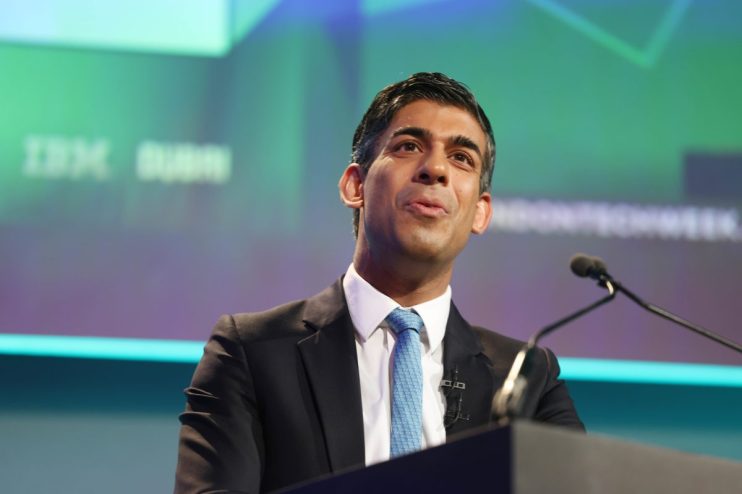
Rishi Sunak has called for a rethink of how work is taxed, warning that AI is beginning to shift hiring patterns as companies weigh the cost of people against automation.
Writing in The Times, Sunak said employers face immediate costs when hiring through national insurance contributions (NIC), while deploying AI carries no equivalent tax burden, which is a gap he suggested could become more significant as businesses adopt the technology.
“You are far more likely to lose your job to someone using AI than to AI itself”, the former prime minister wrote.
His intervention comes as early signs emerge that AI is starting to affect hiring rather than outright employment levels.
Research from Anthropic found no clear rise in unemployment in AI-exposed roles since the launch of generative AI tools, but pointed to a slowdown in hiring, particularly among younger workers.
Job entry rates for those aged 22 to 25 in exposed occupations have fallen compared with pre-2022 levels.
Separate industry data suggests firms are already adjusting behaviour. The British Standards Institution found 41 per cent of businesses say AI is enabling headcount reductions, while nearly a third now consider AI solutions before hiring a human.
And at the same time, broader shifts in the labour market are underway, with more than 1.17 million jobs having been axes in the US in 2025, as companies restructured following the pandemic-era hiring boom.
Taxing a changing labour market
Sunak argued that current policy risks lagging behind these changes, with official labour market data often too slow to capture real-time shifts in hiring and job design.
He backed plans by Rachel Reeves to establish an AI economics institute, but said it would need access to live data from job markets and technology firms to be effective.
“The choice is whether we try to shape this change, or whether we let it swamp us”, he said.
Alongside monitoring, he pointed to structural issues in the tax system.
Employer national insurance contributions generate more than £100bn annually for the Treasury, but economists have increasingly questioned whether taxing employment remains fit for purpose as automation becomes a viable alternative.
Some countries already take a different approach. Denmark and New Zealand, for example, place far less emphasis on taxing jobs, instead relying more heavily on income or consumption taxes.
In the UK, recent increases in employer national insurance have added to hiring costs at a time when businesses are exploring automation, offshoring and alternative labour models.
Surveys suggest a number of employers have already factored these costs into decisions to slow recruitment or reduce headcount.
Proposals of how policy should respond range from cutting taxes on employment to encourage hiring, to introducing levies on companies that replace workers with AI, though ministers have so far rejected the latter.
Sunak also pointed to skills as a key constraint. AI fluency is increasingly being treated as a baseline requirement, with demand for workers able to use and manage AI systems rising sharply.
At the same time, there are concerns that entry-level roles, traditionally a route into the labour market, may shrink as routine tasks are automated.
#Sunak #urges #rethink #taxing #jobs #begins #reshape #hiring