
| Updated:
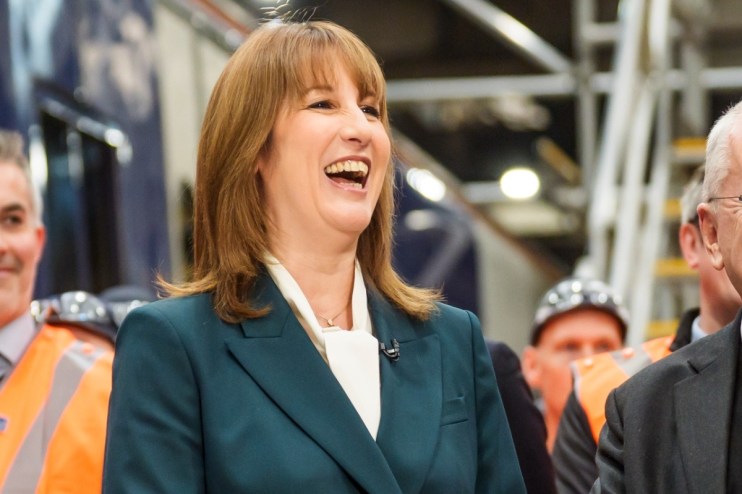
Rachel Reeves’ vision for an “active and strategic” state is just old fashioned dirigisme with a new name, says Emmanuel Igwe
A few hours before her Mais lecture this week, the chancellor had told Faisal Islam in an interview that she “so believed in an active and strategic state… working with working people to shape the economy not just to let the market determine our future.” Later in her lecture, she would reiterated this as the philosophy of the ‘securonomics’ we used to hear so much about in the early days of this government.
The rest of us might recognise this as classic dirigisme that is being polished to sound more flattering. The pitch goes like this: an “active and strategic state” is integral to achieve economic growth through directing investment in key sectors of the economy while also aligning closely with the EU. One cannot help but notice the perennial pro-EU and statist instincts Reeves shares with the mainstream political class creeping up again – albeit couched in a language that alludes to resilience. With an economy poised to grow by barely a percent this year, business investment forecasted to flatline at zero percent and an unemployment rate of 5.2 percent (the highest since 2020), the chancellor ought to take a moment for some self-examination.
On her intentions towards dynamic realignment with the EU, the Chancellor was at her most candid and clear. According to “independent studies”, she said, Brexit has cost the British economy a loss of 8 percent of GDP since 2016. Therefore, she announced that regulatory autonomy from the EU should be the exception against a norm of regulatory alignment. But, as Ross Clark astutely observes in his recent article for The Spectator, Britain’s economic growth has outpaced Germany’s in the years post-Brexit while mirroring France’s.
Is this how Brexit dies? Without the hassle of a referendum? The EU has been emphatically clear that there is no à la carte market access on the menu. To trade with the bloc, Britain must accept its rules on fiscal contributions, social directives, and free movement. Therefore, the plan laid out in Reeves’ lecture is convergence by a thousand cuts, which is presented as reasonable in each stage, but when in the aggregate returns us to the unreasonable control by foreign powers which voters rejected in 2016. Rachel Reeves’ growth strategy is not reasonable in the slightest. It may be described as clever politics at best.
Death by a thousand cuts
The tragedy of this strategy lies in what it forfeits. Due to trade independence post-Brexit, Britain has gained the freedom to adopt lighter-touch financial regulations, more agile data governance, faster pharmaceutical controls, and a more competitive corporation tax structure than the EU. This makes us, in principle, more like Singapore, Switzerland, and the United States, all of whom possess these abilities and have used them to great effect to attract capital and talent. Sacrificing such regulatory autonomy in exchange for smoother agrifood certification and warmer reception at EU summits is, to state the obvious, not a good deal.
On artificial intelligence, the Chancellor announced a Sovereign AI unit, state-backed compute capacity, and plans to make “public procurements a launchpad for scale-ups”. Yet the historical record of government intervention in choosing winners in tech is inauspicious. The examples of British AI success stories which the Chancellor lauded (i.e. DeepMind, Wayve, Arm) clearly are not products of state backing. These companies are a product of research universities, capital markets, and commercial instincts that is impossible to replicate in Whitehall. Reeves’ AI Economic institute and sovereign funds are simply scaffolding placed around a building that only the private sector can create.
Of her three pillars, the regional growth agenda she proposed was the most emotionally appealing. Yes, Britain’s geographical imbalance is economically wasteful. But her solutions (i.e. Development Corporations, compulsory land acquisitions, and City Investment Funds) are reminiscent of Regional Development Agencies that spent over £15 billion in a decade towards this agenda under the last Labour government before being abolished by the Tories. There is no reason to believe that this rebrand would make a success of a failed policy idea.
There are many solutions that could be proffered towards achieving economic growth. Within the context of her speech two solutions she can consider are: unleashing the planning system more radically than the current incremental reforms allow and reversing the rise in employers National Insurance. The weakening of the labour market can be traced to this event as the British Chambers of Commerce, Goldman Sachs, and the House of Commons Library all attest. This has led to a freeze in job hirings, a rise in unemployment, and youth unemployment rising above 16 percent. These are the Chancellor’s own numbers, on her own watch.
Securonomics is simply a rebrand of old dirigisme instincts: the state is understood as the planner, executor, and guarantor of national prosperity. Rachel Reeves misdiagnoses Britain’s growth problem as being a result of too few interventions. In reality, it is a result of too many.
Emmanuel Igwe is an economist at the Prosperity Institute
#Rachel #Reeves #picking #winners