
| Updated:
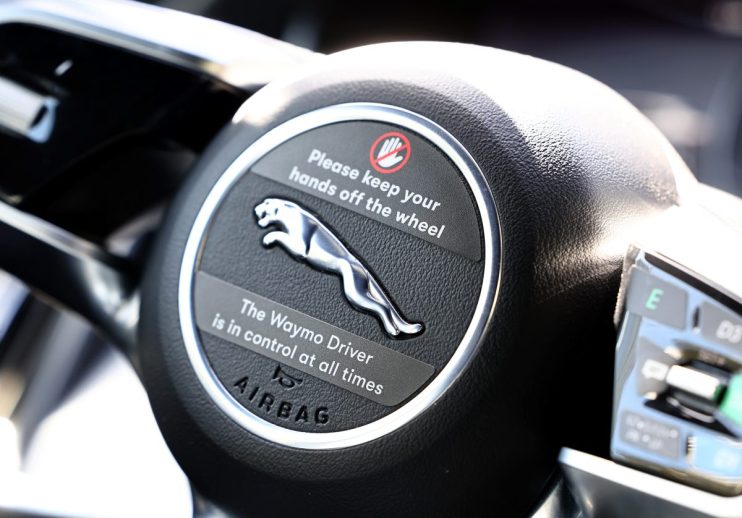
The arrival of driverless ride-hailing would not simply mark a technological milestone. It could also test whether autonomous mobility can ever become a profitable business, says Michael Lenox
A black Jaguar SUV with no one behind the wheel pulls up on a London street. It’s electric and equipped with Waymo’s autonomous driving system. A passenger gets in, selects a destination on their phone, and the car pulls smoothly into traffic. Within the next few years, this scene could move from novelty to normality as Waymo, Google’s parent company Alphabet’s self-driving car division, plans to launch its robotaxi service in the UK capital, with testing already underway and a pilot service scheduled for April 2026.
The arrival of driverless ride-hailing would not simply mark a technological milestone. It could also test whether autonomous mobility can ever become a profitable business. London is already one of Europe’s largest markets for app-based transport: Transport for London licenses more than 100,000 private-hire drivers, while millions of journeys are booked each week through platforms such as Uber and Bolt.
Waymo’s expansion reflects a broader industrial shift already visible in parts of the United States. In cities such as San Francisco and Phoenix, robotaxis are already carrying fare-paying passengers on digitally booked journeys. Each trip is not just a ride but a real-world test of whether its business model holds up.
Vehicles or software?
At stake is a bigger question about where the value sits: in the companies that build the vehicles, or those that write the software that drives them? And the question is not confined to cars. When software becomes the core of a product, the balance of power tends to move with it — as smartphone makers learned when profits flowed to the firms behind the operating systems.
Waymo’s story is a lesson in digital strategy. When software becomes the core of a product, the winners are not necessarily the best manufacturers. They are the ones with the best code, and the most data to improve it. That can change who leads in any industry.
In car manufacturing, firms have long competed on engineering, scale and brand. Autonomous driving challenges all three. Waymo does not manufacture cars; it builds the system that drives them — and it is delivering that system at a vast scale. The company expects to deliver about 1 million rides a week this year in cities such as San Francisco, Los Angeles, Phoenix and Miami. In total, its vehicles have logged more than 125 million fully autonomous miles on U.S. roads, with few reported safety incidents.
Waymo now generates more than $350 million in annual recurring revenue. But it has yet to prove it can deliver sustained profits. For Alphabet, the question is: how long will it keep funding a business that has yet to prove its returns?
The sums are large. So is the potential upside. If autonomous mobility reaches mass adoption, the auto industry could look very different indeed. Instead of owning cars, more people might pay for rides. Fewer cars would then be needed, but they would be used more intensively. And revenue would shift from one-off car sales to recurring income from selling rides.
The same pattern is playing out in other industries as products become services. Waymo is betting on that shift. The company has chosen to operate its own ride-hailing service rather than simply supply its driving system to carmakers. In several U.S. cities, it runs fleets directly through its Waymo One service.
That brings control — but also cost. It means owning the vehicles, managing the service and dealing directly with riders. That is not cheap. In 2021, a vehicle equipped with Waymo Driver was estimated to cost between $130,000 and $150,000 — far more than a conventional car. It is a far more costly model than that of Uber or Lyft, which provide the app and leave drivers to supply the vehicles.
Adoption, meanwhile, remains uncertain — in part because the technology still has limits. In clear weather and predictable traffic, autonomous vehicles perform well. In tougher conditions — like heavy rain, sudden obstacles or broken traffic lights — the system struggles. The final 5 per cent of the driving challenge can require 95% of the engineering effort.
The technology is only one risk. There is also demand: will people trust a driverless car enough to give up owning one? Regulation is another uncertainty. Cities can slow or block expansion. A serious accident can halt operations overnight. And because rollouts happen one city at a time, progress can stall just as quickly as it begins.
Waymo’s planned arrival in London will bring these questions to Europe’s mobility market. European regulators and city authorities will have to decide how autonomous services fit within existing transport systems. The economic model may also face a different test: Europe’s dense historic centres and narrow streets could make scaling autonomous fleets harder than in the wide, grid-based cities where the technology has expanded in the United States.
For now, that makes the economics of driverless cars hard to pin down. As with many new technologies, the early years are messy. Money pours in. Companies expand quickly. Losses mount. Then weaker players fall away. Autonomous vehicles still look to be in that early stretch, so by the time the dust settles, the sector could look very different from today.
But when software runs the product, being big is not enough. What matters is who can build the better system — and improve it faster than everyone else. That will decide who wins, in mobility and in other industries facing the same shift.
Michael Lenox is interim dean at Tayloe Murphy Professor of Business Administration at UVA Darden School of Business
#Robotaxis #coming #London #money