
| Updated:
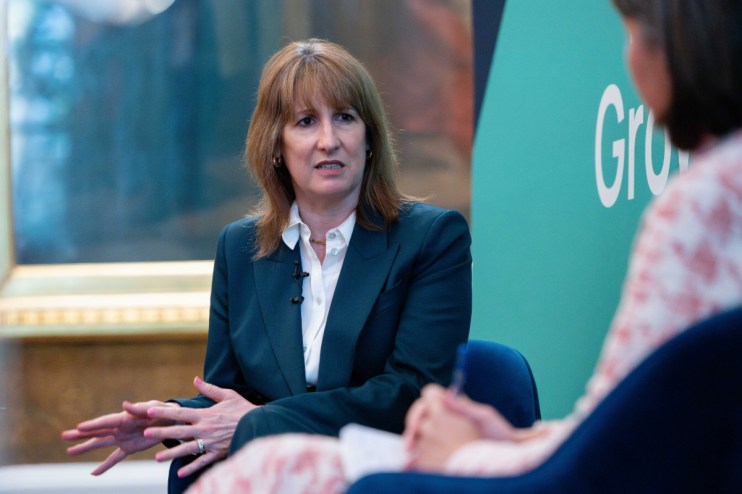
The UK risks finding itself on the brink of recession as a result of the Iran war, a leading economics think tank has warned, as the potential damage to Rachel Reeves’ fiscal headroom and the threat of interest rates hikes has been laid bare in a new report.
In what will come as dire reading for Rachel Reeves’ team in the Treasury, the National Institute of Economic and Social Research (Niesr) has said the UK economy will suffer a hit to growth amounting to at least 0.5 percentage points this year due to the Iran war.
The country’s oldest economics think tank revised down its growth forecasts for the UK economy to 0.9 per cent this year, compared to a previous forecast of 1.4 per cent. The UK economy will then barely grow in 2027, with GDP inching up by just one per cent.
Economists also said that with inflation set to race past the four per cent mark by early next year, the Bank of England will opt to hike interest rates as soon as this July as part of an effort to dampen price pressures.
It said its “relatively benign” central scenario, where the conflict in the Middle East is resolved within the coming days, would see the UK economy narrowly avoid a recession and interest rates hiked by 25 basis points.
But even under this scenario, Reeves’ tax and spending plans are labelled “untenable”.
UK recession warning
The report authors warned a situation where oil prices surged to $140 per barrel would cripple the UK economy and deal a major blow to Reeves’ hopes of stabilising public finances.
In such a scenario, researchers said the Bank’s Monetary Policy Committee would hike interest rates by 150 basis points in order to keep price growth stable, undoing a string of six cuts since July 2024.
The research body recognised that such a move would likely be gradual, meaning that inflation would still reach over five per cent in 2027.
And if the government wished to maintain real terms increases in expenditure until 2030, the Chancellor’s fiscal headroom of £23.6bn, as forecast by the Office for Budget Responsibility in early March, would all but evaporate.
Tough choices on tax and spend
Economists said it would leave Reeves with “tough choices” to make as she ponders the size of a possible energy support package for poorer households and potentially “fanciful” demands on quick increases to the defence budget.
Stephen Millard, deputy director for Macroeconomics at Niesr, said the “renewed period of instability and subdued growth” would force Reeves and the Bank of England to make tough choices. The think tank’s director David Aikman said the energy price shock would leave households poorer, businesses suffering from higher costs and the UK economy at least £35bn smaller than it would have been without the war.
The report also suggested that while lifting restrictions on new licences for oil and gas exploration in the North Sea would not “alleviate” any economic pressures in the short term though it could make the economy “better prepared” for shocks in the future.
Wonks said that current carbon tax systems did not address imported energy supplies while energy storage was the main lesson to be learned for the UK from the war.
The long-term risks
The report reflects growing concerns that lacklusture economic growth since the 2008 financial crisis, recent spikes in inflation and failures in policymaking have left the UK economy more vulnerable to shocks than the likes of France, Germany and the US.
City AM Shadow MPC members, who said the Bank of England should hold rates at Thursday’s meeting, warned that the biggest long-term risks to the UK economy included a stripping of the country’s growth potential, a higher fiscal risk premium “becoming embedded” in gilt yields and bad policy choices made by the government.
Economist Vicky Pryce said: “The problem is that the UK entered this crisis with higher inflation and higher interest rates than other comparable countries. and with more limited room for intervention, so the long-term impact is likely to be greater than elsewhere.”
Jack Meaning, who is the chief UK economist at Barclays and responded to a query independently of the bank, said: “The two biggest, opposing risks are pretty balanced, in my view. On one side, there is the risk that expectations of higher inflation become embedded, as people question whether the Bank of England is able to bring inflation down over the medium term.
“On the other, there is the risk that the current price shock proves to be a short‑run phenomenon and, once it has passed, reveals a weak economy, weighed down further by interest rates that have been kept too high.
“The most worrying scenario is that the former risk exacerbates the latter: that, in order to achieve its inflation target in a credible way, the Bank of England may have to set rates in a way that comes at the cost of higher unemployment and weaker growth.”
#set #suffer #35bn #hit #Iran #war #growth #downgraded