
| Updated:
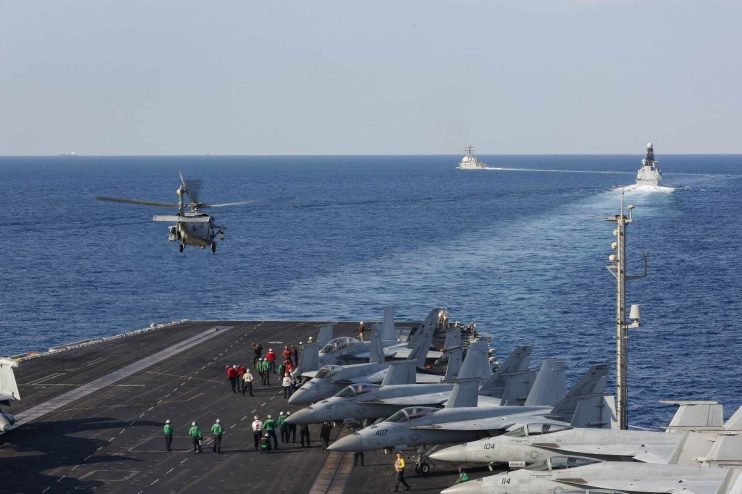
The Iran conflict could be devastating, but while risks evolve and routes shift, trade continues to find a way, says Benoit Urbin
As expected, the latest military escalation involving the United States, Israel and Iran has reintroduced uncertainty into global markets. Energy markets have already come under upward pressure due to the risk of supply disruption in one of the world’s most strategically sensitive regions.
Around 20 per cent of global oil consumption passes through the Strait of Hormuz. Any prolonged disruption would ripple through global supply chains, potentially pushing Brent crude oil beyond $147 per barrel, a level last seen during the 2008 financial crisis.
We expect that higher energy costs will squeeze margins across energy-intensive sectors such as chemicals, plastics, cement, glass and metals; industries that are still adjusting after the shock created by the war in Ukraine.
Food supply chains could also feel the pressure. The Gulf region supplies key nitrogen inputs used in fertilisers, while Egypt remains an important fertiliser exporter to Europe. A sustained disruption could therefore affect energy prices, food markets and industrial supply chains simultaneously.
Rising input costs, higher freight prices and financial volatility increase the risk of payment defaults. Coface’s latest modelling suggests that even a modest tightening in financial conditions could push global insolvency growth towards five per cent in 2026.
Commerce will adjust, as long as there’s the financial infrastructure to sustain it
From our 80 years of experience insuring global trade, Coface has navigated many periods of geopolitical tension and disruption, each time we have seen the same pattern emerge: while risks evolve and routes shift, trade continues to find a way. Even as tensions intensify, history shows that globalisation is resilient, and that global trade rarely stops, it adapts.
In fact, in the current context, we are already beginning to see new corridors emerging, with shipping lines rerouting vessels through Cape of Good Hope instead of the Middle East, and US Pacific ports experiencing a rise in direct trade from East and Southeast Asia. The succession of recent disruptions – from disruptions at the Panama and Suez canals to tariff-driven front-loading – has pushed shipping companies to become far more agile and responsive in how they manage global routes.
In 2025 – a year marked by tariffs and political rivalry – global trade volumes still grew by 3.9 per cent. The US–China trade tensions illustrate how commerce adapts. US imports from China fell by around 30 per cent in value, yet total US imports still increased by five per cent as trade flows shifted to other partners. Vietnam absorbed a significant share of the change. Mexico and Thailand also captured substantial portions of the redirected flows. In many cases, Chinese exports to these intermediary economies rose in parallel.
Trade behaves much like water. When governments attempt to dam its flow through tariffs, sanctions or geopolitical pressure, it finds another route
Economists often search for complex explanations, but the underlying dynamic is straightforward. Trade behaves much like water. When governments attempt to dam its flow through tariffs, sanctions or geopolitical pressure, it finds another route.
That does not mean the risks are insignificant. As supply chains reroute through intermediary markets, trade networks are becoming more complex, pushing companies into unfamiliar markets and counterparties.
This matters because global trade does not run on ships and ports alone – it runs on trust. Most international business takes place on credit, with goods shipped long before payment is received. What keeps the system moving is not diplomacy between governments but confidence between buyers, sellers, and banks. If that confidence falters, credit tightens and trade stalls.
History repeatedly shows that trade is inherently robust. Even amid geopolitical disruption, commerce adjusts, enabled by the financial infrastructure that sustains it, from trade credit insurance to risk analysis and guarantees.
Benoit Urbin is CEO UK & Ireland at Coface
#Global #trade #runs #trust