
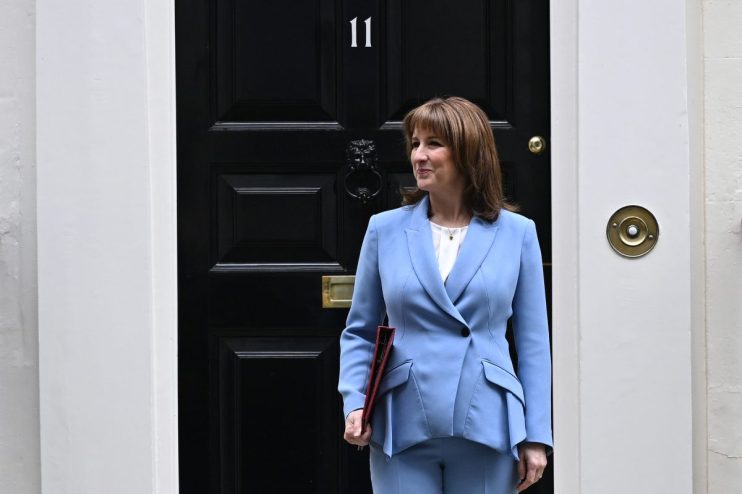
UK government borrowing rose by more than expected in February, it has been revealed, adding a strain on public finances as Chancellor Rachel Reeves faces trouble ahead with deciding the government’s response to the war in Iran.
The Office for National Statistics (ONS) has said that the government borrowed £14bn, with economists having predicted the figure would be around £8bn.
It was the second highest February borrowing figure since records began in 1993.
It leaves total borrowing over the financial year 2025-26 at £125.9bn, closer to the Office for Budget Responsibility (OBR)’s forecast of £133bn for the deficit this year.
The ONS also revealed that debt interest costs were £5.5bn. The figure is set to be higher over the next few months after gilt yields jumped off the back of a hawkish Bank of England interest rates decision and a sell-off in global bond markets.
WPI Strategy economist Martin Beck said there was a “double squeeze” on public finances from the war due to damage to tax receipts as a result of lower growth and the prospect of higher public spending in support for households.
“The Chancellor could choose to invoke the fiscal rules’ ‘escape clause’, allowing the targets to be suspended temporarily in the event of a significant economic shock, provided she explains that decision to the OBR and to Parliament,” Beck said.
“The key question now is not whether the fiscal outlook deteriorates, but how much room the Chancellor will have to absorb that deterioration without returning to tax rises or a squeeze on public spending.”
Chief secretary to the Treasury James Murray said: ”We have the right economic plan. Because of the choices we made before the conflict in the Middle East began, we are better prepared for a more volatile world. We doubled our headroom and borrowing was forecast to be lower than the G7 average.”
“We have to stop spending £1 in every £10 on debt interest, so more money can be spent on policing, schools and the NHS.”
Reeves now faces a myriad of problems in the face of soaring energy prices due to President Trump’s war.
On Thursday, oil prices briefly topped $119 per barrel while UK gas prices are now around double what they were before the war started.
Soaring prices have come as the Strait of Hormuz, a critical global trading passage for crude oil and other key goods, remains blocked amid fears that Iranian missiles will target vessels.
Economists now predict that inflation will bounce back up to as much as five per cent over the coming months, adding to the cost of living troubles faced by British households.
What will Reeves do?
The spotlight is now on Reeves on whether she will announce a further energy support package for families worth billions of pounds, or whether she sticks to her fiscal rules.
After Russia’s full-scale invasion of Ukraine, the Tory government spent around £40bn on easing costs for households.
Reeves has hinted that there was “scope” for an energy package, though it remains unclear how far the government is willing to go.
Public debt before the Ukraine war was at around 80 per cent as a share of GDP. The ONS said on Friday that public sector debt was 93.1 per cent as a share of GDP.
Reeves was also dealt a blow by the Bank of England’s warning it stood “ready” to raise interest rates in the case energy prices continue to spiral amid fears that inflation could surge.
Interest rate cuts have been key to the Labour government’s message of easing the cost of living and relieving pressures on public finances.
#Reeves #hit #spike #government #borrowing