
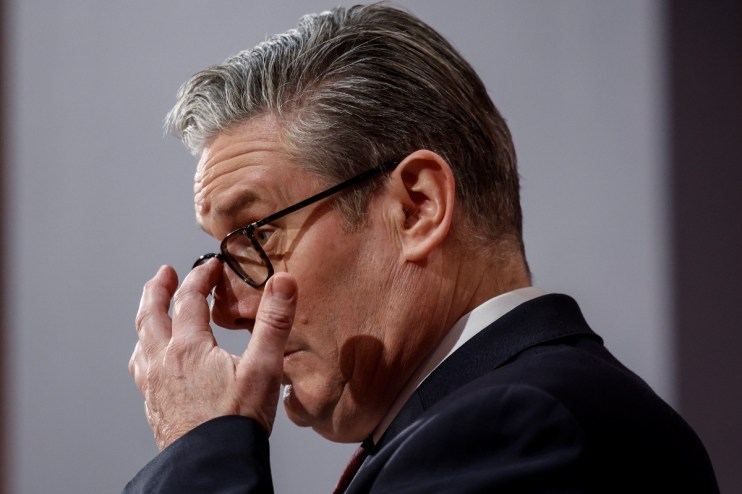
Global markets were rocked on Monday by the latest escalations in the conflict in the Middle East, which have led to Sir Keir Starmer calling an emergency meeting on the brewing energy crisis.
Brent crude – the international benchmark for oil prices – jumped to $112 in Asian markets trading before paring back to around the $109 mark, a gain of around two per cent for the session.
This followed a major ultimatum from Donald Trump, as the US President called for the full re-opening of the Strait of Hormuz with the warning that Iran would see its power plants “obliterated”.
But Iran’s regime has pushed back, insisting the crucial waterway – which enables the flow of around a fifth of the world’s oil supply – remained open to “all except those who violate our soil”.
The regime’s revolutionary guards added that the strait would “be completely closed and will not be opened until our destroyed power plants are rebuilt” should Trump strike.
Starmer will chair an emergency Cobra meeting with the Chancellor, foreign secretary, energy secretary and Bank of England governor today as the heightened tensions threaten to deepen the energy crisis.
It comes after another bombshell warning from the International Energy Agency (IEA), with the group’s director Fatih Birol stating this “crisis… is now two oil crises and one gas crash put all together”.
“No country will be immune,” Birol added.
Chriss O’Shea, the boss of British Gas-owner Centrica, warned over the weekend households would be hit with “inescapable” higher bills should energy prices remained elevated due to the war.
‘Iran is shaping expectations’
The Prime Minister spoke with Trump in a call on Sunday night to discuss ways to ease the global energy shock.
A Downing Street spokesperson said the the situation in the Middle East, “in particular, the need to reopen the Strait of Hormuz to resume global shipping”, was on the docket for conversation.
“They agreed that reopening the Strait of Hormuz was essential to ensure stability in the global energy market,” the spokesperson said, adding that they “agreed to speak again soon”.
Ipek Ozkardeskaya, senior analyst at Swissquote, said there had been a “narrative shift” from how markets respond to the conflict.
“Markets are reacting less to Trump’s announcements – tweets and interviews alike – as the US is increasingly isolated in this conflict, with Western allies reluctant to step in.
“At the same time, the narrative is no longer fully in Washington’s hands, with Iran now shaping expectations and narrative on the ground. TACO hopes are fading.”
Asian markets dived into the red overnight as sell-offs deepened over renewed fears of an energy shock.
South Korea’s Kospi plunged over six per cent, Japan’s Nikkei over three per cent and the India’s flagship index the Nifty 50 tumbled over two per cent.
“Developments over the weekend mean we are entering a new and very dangerous phase for financial markets,” Neil Wilson, investor strategist at Saxo Markets, said.
The FTSE 100 slipped under the 10,000 mark at the end of last week as investors dumped their equity exposure in the pursuit of safe havens.
The crisis threatens to blow a hole in Rachel Reeves’ finely-balanced public finances, with a warning from the Institute for Fiscal Studies (IFS) forecasting a shortfall of potentially £20bn.
Economists projected a rise in inflation linked to higher energy prices could add up to £10bn to the cost of servicing the UK’s stock of index-linked debt. Meanwhile departmental spending would require extra funding due to inflation, along with an uprating of working-age benefits.
#Starmer #chair #Cobra #meeting #energy #crisis #rattles #markets