
| Updated:
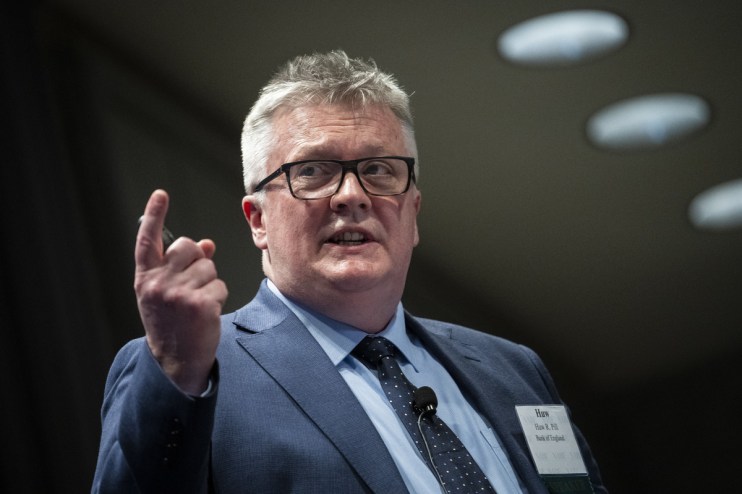
The chief economist at the Bank of England has said interest rates can “contain” inflation as he vowed to act against the damaging effects of the war in Iran.
Huw Pill, a member of the Bank’s Monetary Policy Committee, said he was focused on getting price growth down to two per cent in the medium term, adding that “uncertainty” was not an excuse policymakers should use.
In a speech on Tuesday, Pill said that the Bank had a blind spot in assessing second round effects, whereby higher wage growth can lead to a faster rise in prices.
“One might say that our collective understanding of these interactions is characterised by ‘radical uncertainty’,” Pill said.
The chief economist suggested he voted for interest rates to be held at last week’s meeting due to structural changes in behaviours across price and wage-setting by firms.
He said the MPC could not prevent the energy price shock and could only make them affect people “in a less costly manner”.
Pill, who is one of the most hawkish members on the MPC, said he would look to use interest rates as a tool to support the UK economy if inflation surges as a result of a prolonged war and further disruption across the Strait of Hormuz.
“I stand ready to act – if necessary – to contain the lasting components of any new inflationary pressures so as to deliver on the MPC’s price stability mandate over the medium term,” Pill said.
“The fog of uncertainty in which we always operate cannot be an excuse for inaction.”
Inflation fears leaves interest rate expectations higher
His speech comes a day before the Office for National Statistics reveals where inflation was before the war in Iran began.
The CPI inflation print is expected to be three per cent, underlining the Bank’s struggles in getting price growth to ease at a faster pace over the last year.
The Bank of England has projected inflation to rise to just over 3.5 per cent this year, leaving gilt traders shocked by hawkish language provided by MPC members stating they were willing to hike rates this year.
Other economists have suggested price growth could be nearer five per cent.
On Tuesday, bond traders reduced their expectations of interest rate hikes as the two-year gilt yield came to 4.4 per cent, compared to current Bank Rate of 3.75 per cent. A day before, the two-year gilt yield topped 4.7 per cent.
Pantheon Macroeconomics analysts called attention to Brits’ “high inflation attentiveness” and the risks it posed for spiralling price rises.
The government has not yet unveiled a support package but indicated any energy scheme would only be provided to the poorest households.
Chancellor Rachel Reeves suggested the government could not afford paying for a deeper package as she attacked the previous Conservative government over its £40bn price bailout.
#Interest #rates #inflation