
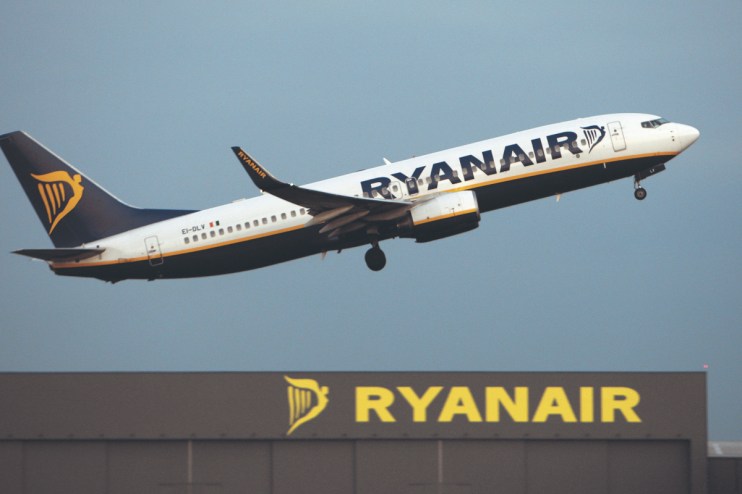
Ryanair and British Airways owner IAG are the two carriers best equipped to manage the crisis unfolding in the in the Middle East, according to a top investment bank which warned that potential supply rationing of jet fuel “could not be ruled out”.
In a note published on Wednesday, Panmure Liberum said the pair of London-listed carriers’ high operating margins should leave them in pole position to shoulder the disruption from the escalating jet fuel prices and the prospect of supply constraints.
“We believe the current crisis creates a buying opportunity in the quality airlines,” Panmure’s transport analyst Gerald Khoo wrote. “However, the crisis could yet deteriorate, with jet fuel supply disruption, recession and a spread of the conflict being the main concerns.”
Aviation fuel prices have more than doubled since the outbreak of hostilities, adding to the woes of carriers, many of which had been forced to ground and reschedule flights from the region’s hubs when Iran began targeting its neighbours in the Gulf.
Shares in major airlines, which tend to be highly cyclical and track economic sentiment and oil prices closely, have plunged, with the valuations of Easyjet, IAG and Ryanair all down between 10 and 30 per cent in the past month.
The heavily indebted Wizz Air’s shares have fallen even further, down more than a third since the US and Israel’s first strike. Panmure judged the hot-pink-liveried carrier, which was forced to warn on profits earlier this month and is London’s most shorted stock, to be the “negative outlier” amid the crisis.
“Wizz Air has entered this crisis with high leverage, few or no unencumbered assets, and zero profit margins,” Khoo wrote.
Conflict sparks jet fuel concerns for airlines
The Iran war has so far caused jet fuel prices to jump from between $800/tonne to more than $1,600/tonne, after Tehran choked off almost all traffic through the vital Strait of Hormuz shipping lane.
European airlines have so far resisted pressure to take out new hedges on the price of jet fuel, though, in a bet that shipping will restart from the Persian Gulf before long. Ryanair boss Michael O’Leary has ruled out any further bets on the future price of fuel now, while Easyjet’s Kenton Jarvis also told the Financial Times he expects the rises to be an acute “spike” before coming down in price.
But Panmure’s Khoo warned that without a resolution soon, jet fuel supplies may have to be rationed in a move that would force airlines to cut back on capacity.
“While there are some stockpiles, and the potential to source supplies from elsewhere, supply
disruption cannot be ruled out and the risks rise the longer the conflict drags on,” he said.
Vietnam Airlines has already been forced to pare back its offering of domestic routes, announcing on Tuesday plans to cancel 23 flights per week from April. According to official figures from industry body IATA, some 40 per cent of Asian airlines’s fuel supplies come from the Gulf, compared with 25 per cent for European airlines.
“It is unclear how jet fuel rationing would be applied,” Khoo wrote, adding: “Airlines would clearly prioritise their most profitable routes, while preferring to trim frequencies on routes with multiple daily flights. However, there is a possibility that governments may attempt to dictate which routes should continue to be served. Governments might also seek to pre-empt larger cuts to flights by enforcing smaller cuts earlier.”
#IAG #Ryanair #equipped #manage #airlines #fuel #rationing