
As Russia’s war in Ukraine stretches into another year, the cost is no longer just military — it is financial. With defence spending rising and revenues under pressure, a critical question is emerging: who is actually funding the Russian economy?
The answer lies with a small group of billionaires. Russia’s oligarchs, who control much of the country’s oil, metals and industrial base, are now being drawn more directly into supporting state finances, according to reporting from the Financial Times and Reuters.
This reveals something deeper: Russia’s economy is not purely state-run — it is sustained by a concentrated network of private wealth that can be mobilised when the system is under strain.
Russia’s federal budget has come under increasing pressure from sustained military spending, while energy revenues remain volatile under sanctions.
Key Takeaways
- Russia’s economy relies heavily on oligarch-controlled industries
- Private billionaire wealth is increasingly supporting state finances
- Energy and commodities remain the core funding engine
- Sanctions have reduced global access but not domestic control
- The system blends private capital with state power
- Economic resilience depends on a small, concentrated elite
Who Are Russia’s Oligarchs?
Russia’s oligarchs emerged from the rapid privatisation of state assets following the collapse of the Soviet Union in the 1990s. During this period, a small group of businessmen acquired controlling stakes in oil, metals and banking at deeply discounted valuations.
Over time, wealth alone was not enough. Influence became dependent on alignment with the Kremlin. Today, oligarchs operate less as independent power centres and more as stewards of strategically important industries within a state-aligned system.
The Billionaires Behind Russia’s Wealth
Few individuals better illustrate how Russia’s economic system functions than the oligarchs who control its most valuable assets.
Suleiman Kerimov — Finance and Gold
Estimated net worth: ~$16B (Forbes)
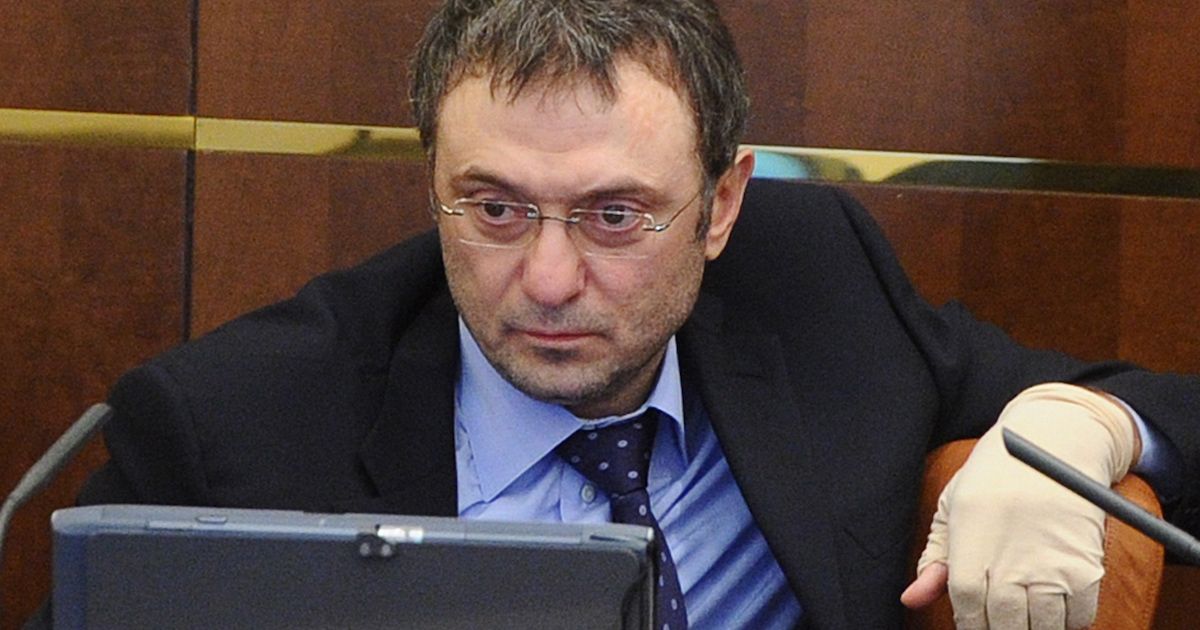
Suleiman Kerimov — Finance and Gold Estimated net worth: ~$16B (Forbes)
Kerimov’s wealth is concentrated in Polyus, Russia’s largest gold producer—an asset that has taken on increased importance as sanctions constrain access to foreign capital. Gold provides a sanctions-resilient store of value, making his holdings strategically valuable to the state.
Reports that he has pledged significant financial support highlight a broader mechanism: individuals with liquid, commodity-backed wealth can be mobilised quickly when fiscal pressure rises. In effect, figures like Kerimov operate as flexible capital providers within Russia’s financial system.
Roman Abramovich — Oil, Steel and Global Assets
Estimated net worth: ~$9B (Forbes)

Roman Abramovich — Oil, Steel and Global Assets Estimated net worth: ~$9B (Forbes)
Abramovich built his fortune through oil (Sibneft) and steel (Evraz), sectors that remain central to Russia’s export economy. Unlike more domestically anchored oligarchs, his wealth historically relied on global asset exposure—making him particularly vulnerable to sanctions.
The forced sale of Chelsea FC and restrictions on overseas assets illustrate how geopolitical pressure can reshape even the most diversified fortunes. His case reflects a broader shift: Russian billionaire wealth is becoming increasingly domestically anchored and less globally mobile.
Oleg Deripaska — Aluminium
Estimated net worth: ~$4B (Forbes)

Oleg Deripaska — Aluminium Estimated net worth: ~$4B (Forbes)
As founder of Rusal, Deripaska controls one of the world’s largest aluminium producers—an industry critical to construction, aerospace and defence supply chains.
Despite years of U.S. sanctions, his business remains embedded in global commodity markets. This highlights a key feature of Russia’s economy: even sanctioned industrial players can continue generating export-linked revenue, sustaining both corporate balance sheets and broader economic activity.
Alexey Mordashov — Steel
Estimated net worth: ~$28–30B (Forbes)

Alexey Mordashov — Steel Estimated net worth: ~$28–30B (Forbes)
Mordashov, Russia’s richest industrialist, built Severstal into one of the country’s most efficient steel producers. Steel is a foundational sector—supporting infrastructure, defence manufacturing and export revenues.
Sanctions have disrupted access to European markets, forcing a strategic pivot. His businesses now operate within a more regionally constrained but state-aligned framework, illustrating how Russia’s industrial base is adapting under pressure while continuing to generate output.
Vladimir Potanin — Metals
Estimated net worth: ~$24B (Forbes)
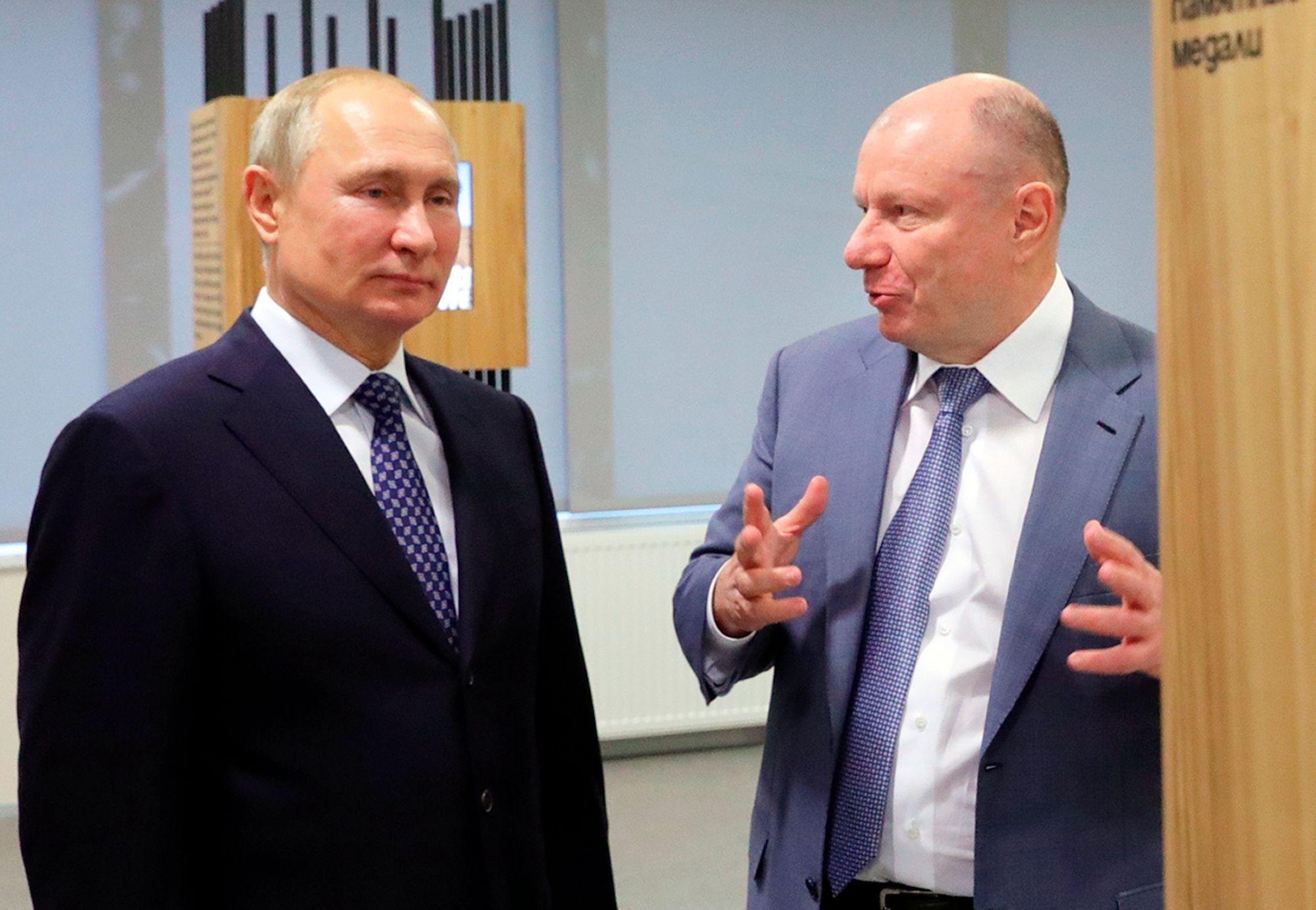
Vladimir Potanin
Potanin controls Norilsk Nickel, one of the world’s largest producers of palladium and nickel—metals essential for automotive production, electronics and energy systems.
This gives his company global strategic significance. In a sanctions-constrained environment, commodity exporters like Norilsk remain a critical source of hard currency inflows, reinforcing the state’s ability to sustain spending.
Where Russia’s Money Really Comes From
Despite their varied profiles, oligarch wealth is concentrated in a narrow set of sectors that form the backbone of Russia’s economy. Energy—particularly oil and gas—remains the dominant source of export revenue, while metals and mining provide globally critical commodities. Heavy industry, including steel and aluminium, underpins both domestic infrastructure and export capacity, supported by financial holding structures that allocate capital across these assets.
These sectors generate the bulk of Russia’s hard currency income. Even under sanctions, they continue to underpin state revenues and economic activity.
How Oligarch Money Actually Funds the State
This is where Russia’s economic model becomes most distinct—and most opaque.
Oligarch funding does not operate through formal taxation alone. Instead, it is shaped by a system of alignment between private capital and state priorities.
Profits from major companies often flow into government-linked structures through dividends, while business leaders are expected to support infrastructure and politically significant projects. In periods of financial strain, this can extend to large “voluntary” contributions—pledges that, while not formally mandated, reflect clear expectations from the state.
At the same time, capital is increasingly retained within the domestic system rather than deployed internationally, reinforcing financial stability at home. In practice, this creates a hybrid system where private capital is not fully independent of the state, but operates as a flexible financial reserve that can be drawn upon when needed.
Sanctions, Seizures and Financial Pressure
Since 2022, Western governments have targeted oligarch wealth through coordinated sanctions.
These measures have included asset freezes across Europe and North America, the seizure of high-value assets such as yachts and property, restrictions on financial transactions, and travel bans. According to Reuters and other reporting, these actions have significantly reduced international mobility and access to capital markets.
However, domestic control remains largely intact. The result is a structural shift in how wealth is managed and deployed. Capital is increasingly held within Russia or allied jurisdictions, global diversification has narrowed, and access to external liquidity has become more constrained.
Why This Matters for Markets and the Global Economy
Russia’s fiscal position is tightening under sustained military spending, reduced energy revenues, and broader economic slowdown.
In this environment, oligarchs play a critical role. They provide liquidity when state revenues fall short, maintain industrial output in key export sectors, and support economic stability within a restricted financial system.
This creates a hybrid model where economic resilience depends not just on commodities, but on the willingness—and capacity—of a small elite to absorb financial pressure.
The Real Risk: Concentrated Power
The strength of Russia’s system is also its vulnerability.
When economic stability depends on a small group of individuals, resilience becomes less about market forces and more about elite capacity. Policy flexibility narrows, and systemic risk increases.
For investors and policymakers, the implication is clear:
Russia’s economic outlook is no longer driven solely by commodities or sanctions—it increasingly depends on how long its billionaire class can continue to absorb the financial strain behind the system.
#Funds #War