
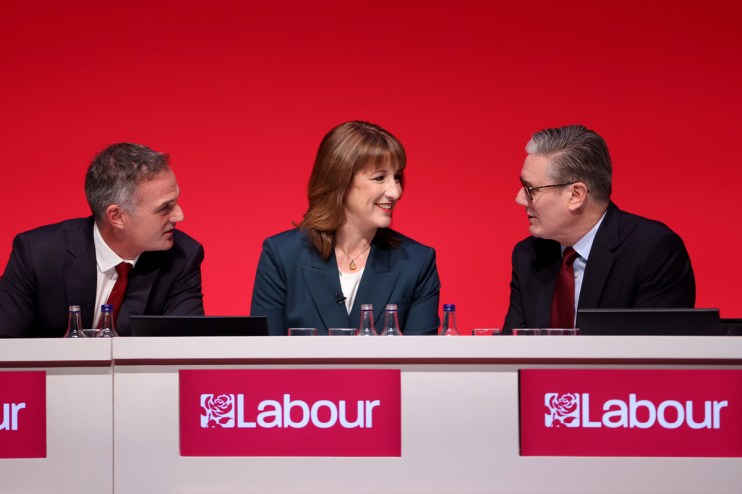
Chancellor Rachel Reeves’ push to crack down on “profiteering” among retailers has led to backlash across industry as suppliers are warning of shortages on the horizon.
Reeves has been warned by industry bosses that the focus on profiteering lacked justification and was part of a political ploy ahead of crucial elections in May.
Asda boss Allan Lieghton said there was “zero credibility” in ministers’ profiteering claims against retailers and said the campaign was a “waste of time”.
He added: “Thankfully we’ve all got better things to do than play that particular political shenanigan game.”
Marks & Spencer boss Stuart Marchin also said “policy costs” on retailers had pushed up energy bills, pointing the finger directly at the government.
Supermarket bosses also snubbed a meeting with the Chancellor, forcing the Treasury to postpone a meeting that was scheduled for Thursday.
Industry sources told the Telegraph that the meeting was “performative” and said retailers were unhappy about its scheduling.
Iceland executive chairman Baron Walker, who donated to Labour ahead of the last General Election, has remained on-side and attacked energy companies directly.
Kyle insists ‘profit is good’
Government ministers are now under pressure to stick to their top priority, their pro-growth mission, amid fears a new “anti-profiteering framework” could add to red tape on businesses.
“Profit is good, and the hard work that our businesses and the people who work in them and run them and found them, should be rewarded with profit,” business secretary Peter Kyle told City AM.
“But where we see a minority exploiting war for profiteering purposes, then you require a government to act in the interests of the economy and our society.
“Too often, when we look at the crises in recent decades, from the financial crisis to the COVID crisis, we saw people exploiting those crises for personal gain, and almost no consequence for it.”
Kyle later interrupted a question to add: “When it comes to growth, regulatory reform, investment in scale-up, being on the side of those high-growth sectors in terms of investing in innovation, we double down on them in times like this. Because we have something – a global force that might challenge growth – it doesn’t mean that we shelve [the mission].”
Reeves’ package could ‘pay for itself’
Businesses and households are now eagerly waiting for Reeves to announce a “targeted” support plan to support people with energy bills.
Deutsche Bank analysis has suggested that a £4bn package, which could include an extension to a freeze in fuel duty plus a £150 pound on energy bills, could “pay for itself” if it led to lower interest rates.
“Taking into account some of the positive growth impulse as a result of lower CPI inflation and lower interest rates, we estimate that borrowing could be nearly £5bn lower at the very end of the forecast horizon,” Deutsche Bank economist Sanjay Raja.
He added that the analysis depended on gilt yield increases coming mainly over those with short-term maturities and a reduction in inflation leading to cuts.
Raja suggested a spending package could also lead to more fiscal headroom.
#Reeves #energy #bill #crackdown #prompts #industry #backlash