
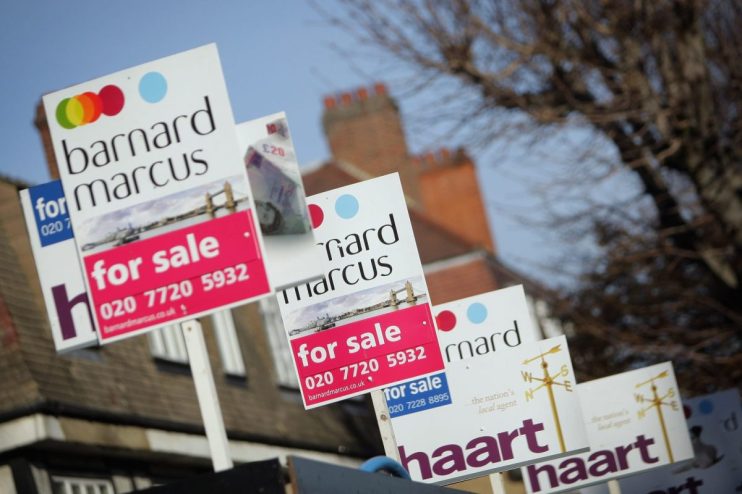
House prices picked up in March as the property market gained traction after a slow start to the year, though experts warn the Iran war could “cloud” this momentum.
The UK’s house prices rose by 2.2 per cent year on year in March, up from one per cent growth in the year to February, as prices grew 0.9 per cent month on month, according to Nationwide’s house price index.
This house price growth comes among other indications that the property market was strengthening before the Iran war hit market confidence, though experts are split over whether the conflict will make lasting damage.
The Outer South East and East Anglia both saw year-on-year declines in house prices, of 0.7 and 0.4 per cent.
Though London’s property market had weakened in recent months house prices in the capital jumped up 1.7 per cent in the year to March, up from 0.7 per cent growth in February.
The capital saw the strongest price growth in the south of England, with the average London house price at £538,181 in the first quarter of this year.
Robert Gardner, Nationwide’s chief economist, said: “The pickup in house price growth suggests that the market had regained momentum after the slowdown recorded around the turn of the year.
“However, the sharp rise in global energy prices in response to developments in the Middle East represents a significant shock to the global economy, clouding the outlook.”
But Nationwide said the outlook for the property market has shifted “dramatically” since the start of the year.
Interest rate expectations torn up
Though the Bank of England had been expected to cut interest rates twice this year, the multiple interest rate increases now forecast have prompted lenders to offer more long term mortgage interest rates, according to Nationwide.
Gardner said: “If sustained, this could reverse some of the improvement in housing affordability that has taken place in recent years.
“With consumer sentiment also likely to be dented by the uncertain outlook and the prospect of rising energy costs, housing market activity is likely to soften.”
The Iran war also prompted lenders to pull mortgages off the market, with the number of deals on offer having shrunk by a fifth since the start of the conflict.
Mortgage approvals jumped up in February from a two-year low in January, which some lenders said is a sign that disruption from the Iran war will be short-lived.
But Tom Bill, head of residential research at Knight Frank, said the full impact of the war on the property market is yet to come.
He said: “The impact from the Middle East conflict on the housing market is still in the post.
“The fact mortgage offers last for six months means the effect of higher borrowing costs will filter into the market this spring and summer, putting downwards pressure on prices and transaction volumes.”
Nathan Emerson, chief executive of estate agent body Propertymark, said: “It’s a positive sign that confidence is returning, but sustained growth will depend on stability in borrowing costs and a consistent flow of motivated buyers entering the market.”
#House #prices #pick #property #outlook #remains #clouded