
| Updated:
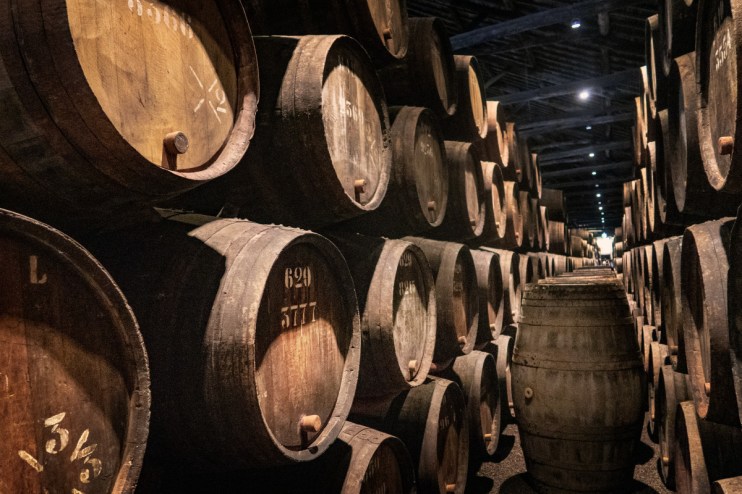
In the world of alternative investments, few assets carry the allure of a Scotch whisky cask.
For centuries, this liquid gold has aged in the quiet shadows of Scottish warehouses, governed by tradition, family lineages, and a “gentleman’s agreement” style of business.
However, this charm masked a systemic problem that Benjamin Lancaster, Founder and Partner VCL Vintners (VCL) alongside business partner Stuart Thom, sought to resolve: how do you build institutional-grade trust in an industry that has historically thrived on opacity?
VCL founder’s journey
Lancaster’s route into the spirits world did not begin in a distillery, but in hospitality. More than twenty years spent working both front and back of house exposed him to the mechanics of premium wines and spirits – how they were sourced, presented and ultimately valued.
Regular interactions with brand ambassadors and producers offered a behind-the-scenes education but it was the theatre and prestige of the spirits sector that stood out against the more traditional rhythms of wine, and it was a world that increasingly drew his attention.
This interest deepened during a period of travel where visits to wineries and early-stage distilleries provided a rare glimpse into production and, more importantly, the scale of opportunity within each category.
“I had a real rapport with one wine supplier who kindly introduced me to influential brand owners in the wine and spirits world,” he says. “That was a real eye-opener in terms of just how big the sector is.”
Over time, Lancaster built a career spanning hospitality, wine and spirits, developing a commercial instinct grounded in product, market dynamics and commercial structuring. It was this combination that led him to pioneer VCL’s move into spirits investment.
Today, he holds positions and interests across a number of businesses operating at the intersection of luxury assets and alternative investment, applying that same entrepreneurial lens to a rapidly evolving sector.
Market leaders
VCL was founded in 2010, with Lancaster joining shortly after. Drawing on his experience he identified a key barrier to entry: a lack of transparency in ownership. “We saw a void. Everything in the industry was being done on Excel or paper. When you combine increasing asset values with archaic, slow processes, you create a bottleneck. We wanted to “grease the wheels” – quickening the management and transfer of ownership. If the infrastructure moves faster, the industry grows faster,” he says.
To redress these issues, Lancaster made the pivotal decision to move beyond the traditional broker model. While other companies were content to act as mere middlemen, VCL set out to build a comprehensive management platform. By building dedicated digital infrastructure, VCL replaced “handshake trust” with “systemic trust.”
This culminated in the sale of a rare 1991 Macallan whisky cask in 2021, which hit a record by selling for $2.33m through an auction facilitated by VCL Vintners and the marketplace Metacask. This landmark sale combined the physical asset – containing approximately 600 bottles’ worth of premium Scotch – with a specially commissioned artwork by Trevor Jones titled “The Angel’s Share.” This event stands as definitive proof of concept for VCL Vintners’ mission to reform the secondary whisky market, demonstrating that digital innovation can unlock significant value while preserving the spirit’s heritage.
By introducing a client portal that delivers transparent, independently verified information – rather than relying solely on a broker’s word – VCL has given investors the tools to make informed decisions. A recently-released app, extending the platform, allows clients to track valuations, review historical performance and access granular data, such as ‘digital deeds’ and regauging records.
Lancaster has also sought to raise standards across the wider industry through Proof 8 – a company he helped fund – which is reimagining the industry with innovative solutions for distillery management, cask maturation, production, cask ownership and consumer engagement.
New markets
The competitive advantage Lancaster has built stems from this “credibility first” approach. While newer companies have entered the space attempting to imitate the VCL model, they often lack the “boots on the ground” history and the depth of expertise that Lancaster has cultivated over fifteen years.
“They say imitation is the best form of flattery. We pioneered this space in the UK as a bona fide asset class over the last 15 years. We created the template that many others followed,” he notes.
With the launch of One Cask At A Time (OCAAT), VCL’s independent bottling line, this process moved one step further.
“We’ve also invested heavily in people,” says Lancaster. “Some critics claim bottling arms are created solely as an “exit strategy” for clients, but that is only part of where the vision is rooted, we’re passionate about whisky and bottling is a really exciting step that we took. We brought in Russell Bradley, who was previously the Production and NPD manager on the team at House of Hazelwood.
“OCAAT is a standalone project because independent bottling is a massive part of the whisky culture,” he adds.
This integrated approach, based on trust, has worked well for the brand. Today, VCL has over 2,000 clients worldwide, manages 16,000 casks valued in excess of £150m and employs 17 members of staff with an annual turnover of £20m.
With that growth has come a commitment to supporting the industry behind it. Through the VCL Foundation, the company now sponsors two bursaries with The Drinks Trust, supporting more than 80 people across the sector to retrain or upskill each year.
In an industry built on long-term thinking, VCL is investing not just in casks, but in the people who will shape whisky’s future.
#VCL #modernising #whisky #cask #market