
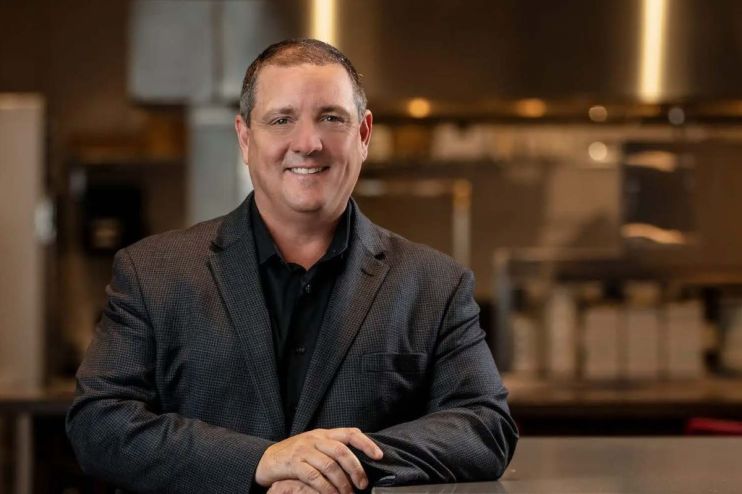
TGI Fridays had its heyday in the 1980s but slumped into administration last year. Its new boss Ray Blanchette tells Felix Armstrong the nostalgic chain can win back Britain after a period in turmoil.
“I land at Heathrow and jump in a cab. The plane got in late,” says Ray Blanchette, recalling the day he plucked TGI Fridays’ UK arm out of administration.
“One of the things I love about the cabs in the UK is if you’re up for a conversation, there’s always one to be had,” he says. His taxi driver, after hearing Blanchette works for TGI Fridays, said he had celebrated his daughter’s birthday in Pizza Express the night before – but said he wished he had been in a branch of TGI, where he’d taken her as a child.
“I was like: ‘You know what, you’ve sold me.’ At the end of that cab ride, I walked into the meeting. I was already there: ‘We’re doing this’,” Blanchette recalls telling his partners.
“We’re either running away from this or we’re getting all the way in.”
Sugarloaf, the investment firm run by Blanchette, had swooped in to rescue the restaurant chain out of administration in 2025, and later picked up its UK operations.
TGI Fridays, founded in Manhattan in 1965, is a chain of American diner-style restaurants known for its bright red-and-white design and casual atmosphere. The group expanded rapidly into the UK in the 1980s, establishing its flagship Covent Garden site in 1987.
If Jennifer Anniston is poking fun at you, how can that be a bad thing?
But the central London restaurant shuttered in 2022 and the UK operation soon collapsed into administration. Blanchette’s Sugarloaf, having snapped up the restaurant chain’s global operations – which were also battling hard times – took on most of the UK sites early this year, in a deal which cost 16 restaurants and 456 jobs.
Ray Blanchette, sitting in a bright-red booth at a TGI in Birmingham’s NEC centre, now runs the restaurant chain’s global operations but began his career in the kitchen of its Philadelphia branch back in 1989.
“It was love at first sight,” he says, describing how he was awed by the outfits, in-jokes and acronyms: “dub-dubs” for waiter-waitress, “SPG” (Smiling People Greeter) for floor manager.
“Fridays had such a cool culture. People joke about the buttons and the flair and all that kind of stuff,” he says, referencing the parodied portrayal of TGI Fridays in the 1999 cult classic Office Space.
“If Jennifer Anniston is poking fun at you, I don’t know how that can be a bad thing, right?”
‘I’m too old to work with disreputable people’
Blanchette worked his way to the top of the Philadelphia restaurant before climbing up the firm’s management, eventually to president, before leaving to run another company in 2007. Blanchette was brought back to TGI as chief executive before the Covid-19 pandemic, and later quit after a “fallout” with the board.
When asked about the argument that pushed him to leave his beloved restaurant chain, Blanchette says it boiled down to “items that they thought we should sell on the menu that I thought didn’t fit with TGI Fridays”.
I woke up in a full body sweat thinking about the 500 people I fired
He continues: “And I’m sure it was deeper than that too. I felt our values didn’t line up. And I’m too old to work with disreputable people.”
When he quit, Blanchette chose to take on a TGI franchise instead of claiming severance pay. His franchise firm, Sugarloaf, snapped up the restaurant chain’s various global arms, until he eventually took control of the entire business: “Two years later I took over the whole brand and fired the board that fired me.”
But Blanchette insists he is not just out for personal vengeance. He recalls signing off on the deal which put nearly 500 UK workers out of a job: “The night before the administration, I was at a conference somewhere in the US and was speaking the next day.
“I woke up at two o’clock in the morning in one of those full body sweats, thinking about the 500 people that I was going to displace literally that morning.”
Having taken on the UK brand, Blanchette is bullish about its prospects. “We for sure didn’t buy this business just to caretake… It’s hard to find a British person that hasn’t celebrated a birthday at a TGI Fridays.
“There’s enough left to work with here that I think not only is it saveable but it deserves to be saved.”
Employment costs blocking young workers
Blanchette says he has concerns about the tax landscape in the UK, where business rates, employment rights and minimum wage changes risk piling extra costs on hospitality. Depending on the length of the blockage to the Strait of Hormuz, the Iran war could slow Blanchette’s work to lower prices at TGI Fridays’ UK branches, he says.
Blanchette says the government’s minimum wage hikes are a particular cause for concern. In the US, he has been lobbying for a lower-rate entry-level wage to allow younger people into hospitality jobs, which he says would account for the cost to employers of training people in their first roles. “You’d have a lot more people getting access to work at an earlier age” if governments lowered employment costs on hospitality and retail firms, he says.
But the restaurant boss has bold plans for expansion – not least to return meaningfully to London, where it only has a few sites including at the O2 and Wembley. Blanchette says his first task is to restore quality and value. This takes place on the menu, where the chain has introduced a £12.49 starter, main and drink combo – and in the kitchen.
Blanchette describes his horror at seeing kitchens rely on cooking meals straight from the freezer: “That’s just not Fridays,” he says.
Of the 33 restaurants acquired in the takeover, 31 are on solid footing with supportive landlords, Blanchette said, though he could not rule out the closure of the remaining two.
While he is keen to expand, Blanchette is forcing himself to be patient. He says: “It really sticks in my craw that we have no restaurants in London. I grew up with Covent Garden and Piccadilly and then later on Leicester Square.
“It just breaks my heart that I can’t go to Covent Garden. […] So I have a strong desire to get back to London quick, but I’ll be patient.”
#fired #board #fired