
| Updated:
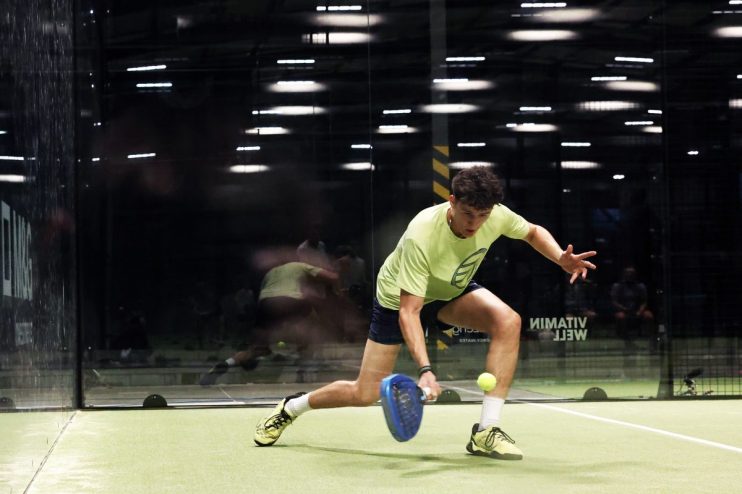
Padel hasn’t taken off in the UK by accident. It has grown quickly because it arrived at exactly the right moment.
Like many sports, it benefited from Covid-19. At a time when people were looking for ways to stay active and social, padel offered something simple: it was easy to pick up, played in small groups, and inherently social. That combination brought a new audience into sport, many of whom had never picked up a racket before.
Since then, investment has followed. Courts have been built, venues have opened, and participation has continued to rise. That momentum is now visible at the top end of the sport too, with London set to host its first Premier Padel event this summer – a sign of how quickly the UK has become part of the global calendar.
The latest LTA figures reinforce that trajectory, with more than 800,000 people now playing the sport across Britain.
But growth on its own is not the full story. What matters now is what sits behind it.
Padel’s next steps
One of the biggest risks for padel in the UK is assuming that demand automatically creates a sustainable market. We have already seen what happens when that assumption goes unchecked. In Sweden, rapid expansion and heavy investment led to a boom, followed by a sharp correction. Clubs were built too quickly, often without a clear long-term model, and many failed. The UK is at an earlier stage, and that presents an opportunity as much as a risk.
There are some important differences. The sport here is developing with greater involvement from governing bodies. In the UK, padel sits under the Lawn Tennis Association (LTA), whereas in Sweden it developed as a standalone, market-led sport. That has led to a clearer focus on infrastructure and a more measured pace of growth, which should create a more stable foundation.
But it will still require discipline.
There are also genuine challenges that need to be addressed if padel is to move beyond its current phase.
Cost is one of them. At present, it can be an expensive sport to play regularly, particularly when court time is limited and demand is high. That is not unusual for a sport in its early growth phase, but in the long term it will need to become more accessible. Greater use of public spaces, alongside broader support from the LTA and government, will be key to that.
Investment
Capacity is another issue. Quite simply, there are not yet enough courts to meet demand in many parts of the country. That creates friction for new players and limits how quickly the sport can grow sustainably.
And then there is the performance side. The UK is still developing its pathway for elite players. While there are encouraging signs, the lack of funding and infrastructure has meant British players have been behind some of their European counterparts.
That is starting to change. We are seeing more structured support come into the sport, including what we are trying to build at VVV Sports, where we are investing in player development and competition pathways. Players such as Catherine Rose, Tia Norton and Christian Medina Murphy are part of that next wave, but these systems take time to mature, and results at the top level will follow rather than lead.
All of this points to the same conclusion.
Padel’s growth phase is largely behind it. What comes next is a build phase and one that will define whether the sport can convert momentum into something more lasting.
That means investing in the right infrastructure, creating sustainable venues and supporting players properly. If that happens, the UK has a real opportunity.
Padel is not just another participation trend. It is a sport that fits how people want to play today — social, accessible and flexible. The opportunity now is to ensure the structures around it are built to last. If they are, this is only the beginning.
Jonathan Rowland is Executive Chairman of VVV Sports
#Padels #growth #phase #largely