
The Cotswolds has exploded with tourism options for the super-wealthy. But at what cost? Adam Bloodworth investigates
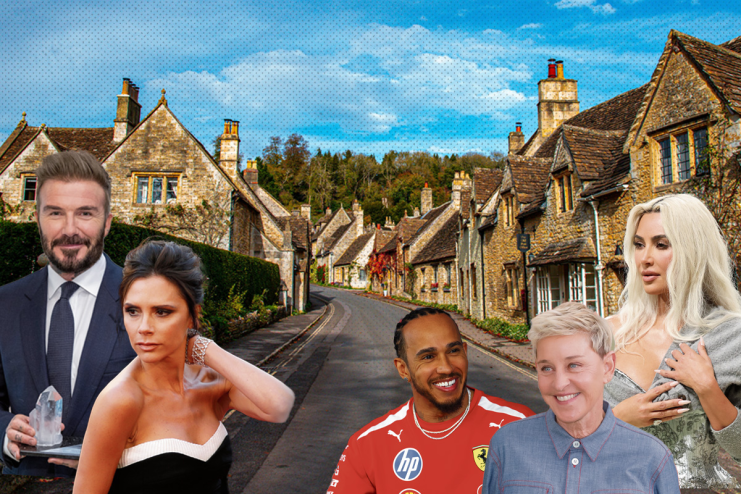
Talk of “The Caaatswolds” has been commonplace in Los Angeles for some time. However, Kim Kardashian’s recent visit to Estelle Manor to conduct her tryst with Lewis Hamilton gave the patch of farmland an especially big shot in the arm.
Grainy long lens shots of the reality star walking from private jet to SUV cemented the fact the Cotswolds is mainstream now. No longer just for poshos from the King’s Road.
As documented in the recent televised adaptation of Jilly Cooper’s 1988 novel Rivals, the chattering classes have long lorded over the Cotswolds. Now reels documenting what it’s “really” like have gone nuclear with broader audiences.
One entitled “British countryside aesthetics” shows a Ferrari driving up Estelle Manor’s driveway. It has been viewed hundreds of thousands of times. The Gen Z ‘countrycore’ trend, coupled with nostalgic ideas of a Britain where everyone hung around playing tennis at the country club, have further romanticised the area.
Then there is the onslaught of A-List American celebrities to have permanently moved to the Cotswolds. They have further raised the area’s profile. Ellen DeGeneres and Beyonce and Jay Z are some of the names that have bought houses in the area. Alongside this, Taylor Swift, Kourtney Kardashian, Kamala Harris and JD Vance have all visited the region.
The Beckham effect: Celebrity residents in Great Tew
Add to that list the rise of high profile British celebrities to have moved there. David and Victoria Beckham and Liam Gallagher have all been shaping the Cotswolds’ public image. Just this week, the Beckhams’ plans to build an elaborate “wildflower meadow” has been criticised by residents. One called their new extension plans a “joke”. Residents have said the build threatens to ruin the natural landscape of the village of Great Tew.
Accusations have been growing that the area’s natural beauty is being compromised by development and over-tourism. Jeremy Clarkson’s farm shop has attracted thousands to Chipping Norton. There have been reports of hours-long queues disrupting the lives of locals trying to access overstuffed country lanes. But the counterpoint is that his Amazon farming show was heralded by one sheep farmer as having done “more for farmers in one TV series than Countryfile managed in 30 years”.
Luxury hotels and the ‘Countrycore’ trend: Estelle Manor & Soho Farmhouse
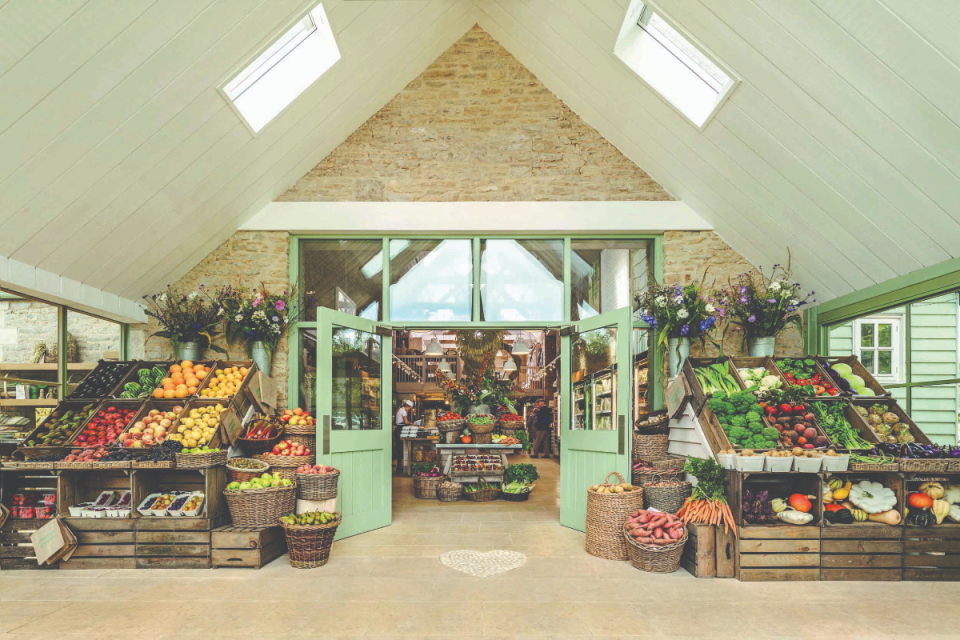
Another local accused of adding to the over-development is Lady Bamford. She is the heiress of the JCB empire, whose Daylesford wellness empire spans 32 holiday cottages across the Cotswolds. She also runs a farm shop and a restaurant.
A controversial ‘landscape observatory’ is in the works, despite fears of “significant adverse effects” on the area’s natural beauty filed in planning objections by the Cotswolds National Landscape Board.
With the price of a house in the Cotswolds 14 times higher than an average salary, luxury property is driving up the cost of rental and home ownership, forcing people out and ultimately making life hard for those not on the very top dime.
“The nature and character of Cotswold villages is changing and Oddington [a small village not far from Chipping Norton] is at the forefront of these changes as the Daylesford empire expands relentlessly,” says David Thorpe, chairman of the Oddington Parish Council. “Both ‘village pubs’ in Oddington are now owned by Lady Bamford and they will be village pubs no more. The once tranquil village is now full of holiday lets and expensive second homes.
“We all have to accept change but the relentless nature is disturbing many residents. The Daylesford empire is a catalyst for an influx of UK and foreign owners buying luxury homes and a ‘destination’.
“All this impacts on the community and the village is fighting hard to keep the community spirit intact. We continue to have a good relationship with the Daylesford business but the unintended long-term consequences for the village residents are daunting.”
‘Pubs offer an essential lifeline to communities’
Claire Alexander is co-owner of The Killingworth Castle, 16 miles from Oddington in the neighbouring village of Wootton. “I think what’s shocking now is the growing divide between high end luxury places on one side and the hundreds of independent pubs and restaurants going bust at the other end of the scale,” she says.
“What we are seeing in the Cotswolds is that there are certain investors buying up pubs and investing heavily so they can write off tax. It’s these businesses that are being criticised for lacking in soul and all looking the same shade of beige. Small, independent family-run businesses have plenty of soul but don’t have any financial slack and so can’t compete with the new openings, which is one of the reasons so many are closing.”
Emma McClarkin, CEO of the British Beer and Pub Association, agrees. “The social value of Britain’s pubs cannot be understated, especially for rural regions like the Cotswolds, in which pubs offer an essential lifeline for so many communities.”
On the other side of the coin, the Cotswolds is a jolly lovely place to go for a luxury weekend away. Close to London, with beautiful nature and great amenities. So if expansion is inevitable, how can we do it sustainably?
Inside the Cotswolds: UK’s A-List enclave
I’m driving down narrow country lanes in a Mercedes Viano – one of those slightly imposing box-shaped luxury vans you see celebs jump out of – en route to Temple Guiting, a private Cotswolds homestay that can command £90,000 a week for a family takeover.
I’m with Emily Ford, the senior lifestyle manager for concierge service Ellidore. It’s her job to organise visits to the area for her high-net-worth clients.
To ensure they never have to lift a finger, she spends weeks driving around the Cotswolds’ plushest homes, doing reccies to decide which properties might work for the 0.01 per cent. “We’ve flown wagyu hotdogs to Africa for a campfire picnic safari because it was a client’s favourite type of food,” she tells me.
“Another client fell in love with a specific dish at a restaurant. We signed NDAs to have the chef write out the recipe and shipped it to the client. People will pay that price not to have to worry about anything.”
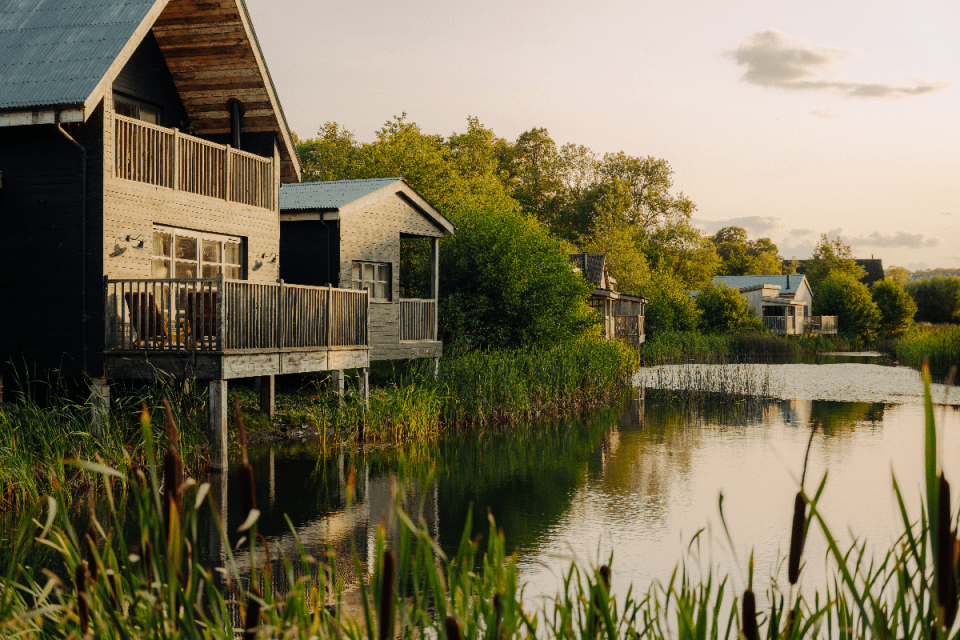
Temple Guiting is a 15th century manor house near Cheltenham. Features include spiral staircases used by the Tudors, medieval arched windows and stone towers where live doves were once kept (they now house secret hot tubs).
There is a heated outdoor pool, tennis court and lawn leading to a private boating lake. The late architectural historian Sir Nikolaus Pevsner called the building “one of the finest, if not the very best of the small Cotswold Tudor houses”.
Cotswolds country pubs feel more formal
It’s sunny when I visit, and the house is illuminated by shards of light. It is the sort of place that would reveal itself over a week’s stay, full of snugs, living rooms and lakes rewarding the intrepid visitor. With a private transfer from town to country with Ellidore, you could take breakfast in the capital and be wild swimming by late morning.
A short walk away, the village shop had been open for three afternoons per week, but was forced to close in 2022. The building which housed it has been subsumed into the grounds of Temple Guiting.
No longer selling rhubarb custards in paper bags, it is now a space for corporate guests to use so that they don’t disturb the family holidaying in the main house. “I don’t think people who’ve lived here a long time love it. In their heads they’ve been outpriced,” says Caroline Hortsmann, associate director of the property, summing up the tensions between these sorts of properties and their local environments. “We went for a more luxurious level as it needs to work as a business. It’s hard to keep everyone happy.”
A 20 minute drive away, in the village of Kingham, Ford and I stopped for lunch at The White Rabbit. It is one of the four Daylesford pubs-with-rooms. It is a quintessential country pub, with a roaring wood fire that’s entirely for show (it’s warm outside). There’s also a hodge-podge of wooden seating mixed with comfy upholstered chairs.
The main giveaway that this pub is no longer an independent business is the uniformity of the service. The atmosphere feels more formal than you’d expect in a country pub. And our “chicken three ways” cost a hundred pounds, so, really, this isn’t a country pub at all, rather it’s a fancy restaurant masquerading as one.
Temple Guiting – the countryside escape in the mind’s eye
The food is very good, which is perhaps no surprise. Lady Bamford is lauded for being a pioneer of organic farming and for her nose-to-tail butchering philosophy. For those who participate, The Wild Rabbit offers a convivial environment that suits five-hour lunches that roll into dinnertime.
Next we embark on a tour of the nearby farmshop, spa and holiday homes. We are driven around in Daylesford-branded Range Rovers, huge totems of the Bamford brand. The hospitality group has in many ways turned the villages of Oddington, Kingham and Charlbury into resorts branded with their own personal stamp.
We visit two of the holiday homes, which are decorated with simple, traditional furniture. One thing I notice is that both homes display the same items. I spot a copy of Richard E Grant’s autobiography in both living rooms. This reminds me of what Alexander from The Killingworth Castle said: everything is in the same shade of beige.
In the back of the Viano, Ford and I talk about the impossible conundrum faced by the tourism industry. About how her clients don’t want to fly so much right now due to the problems in the world. And we talk more about why the Cotswolds in particular is having a moment.
It feels a bit like London
For her clients, some of the wealthiest people in the world, it’s the destination du jour. “You still get that taste of what London offers while being in the countryside, which people really like,” she says.
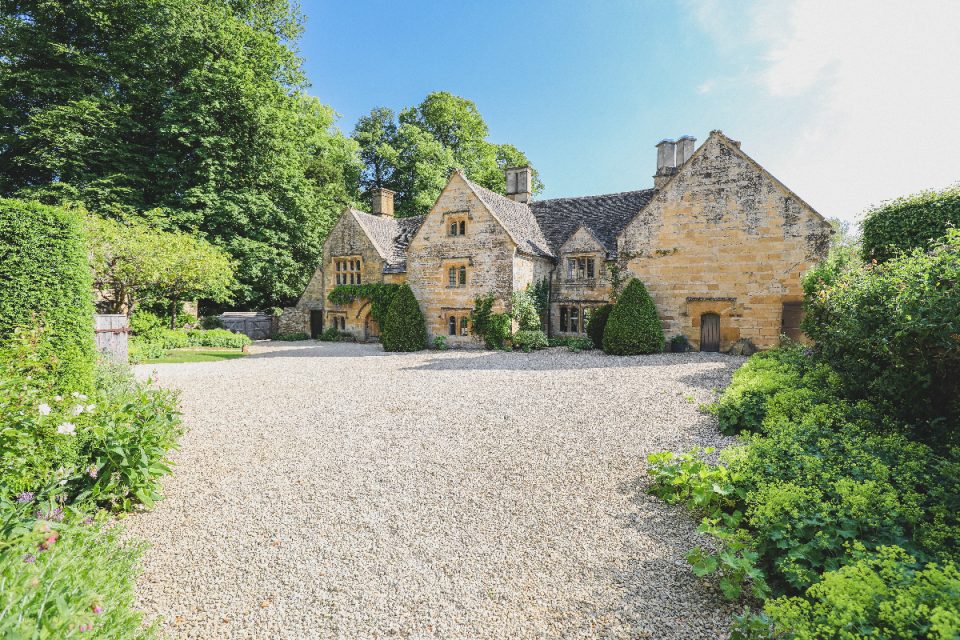
Our final stop is Soho Farmhouse, which helped light the fuse for the regeneration of the area when it opened in 2014. Soho Farmhouse offers a resort-style countryside experience for its club members. There are farm animals, corrugated iron cabins like you’d find in Texas and a warm outdoor pool. Sitting flush with a lake, ducks swim past, giving the impression you’re sharing the same body of water.
Soho House is no stranger to criticism. Last month, The Independent asked how “Soho House lost its cool.” But despite that – similarly to the Bamford empire – it is hugely successful. I bump into three A-Listers within 24 hours.
I understand why they go. This is the countryside experience that lives in your mind’s eye. But when it opened, Giles Coren and Marina O’Loughlin were two of the columnists who criticised its inauthenticity. The fear being that Soho Farmhouse dumped fashionista Londoners in the countryside who wouldn’t leave the property for the duration of their visit. Nor would they contribute to the local economy or experience much in the way of nature.
The A-List musician I saw in the Cotswolds was now streaming to millions
Proof that this demographic is perpetually on a plane came the next day, when the A-List musician I bumped into on his morning stroll appeared on television, streaming to millions live from New York.
For Soho Farmhouse general manager Tom Kerr, luxury development in the Cotswolds can only be a good thing. “I think every area needs to evolve,” he says. “Every area has its moment. I’m sure in five years it might all change and calm down a little bit, but ride the wave while we have it, right?”
A no phones policy
Another reason A-listers go to Soho Farmhouse is for privacy. The property exists in something of a vacuum, with a no phones policy. It is fairly well upheld, except for the odd drunken dinnertime selfie overlooked by staff.
The luxury developments are changing the nature of this farmland. But so too are the DFLs turning up to capture content, pissing off the wealthy privacy-seekers.
Nicole Rover, deputy manager at The Pig at The Cotswolds, experiences this culture clash when people check into her hotel. “A lot of guests walk through the door not even acknowledging that I’m here, or that I’m smiling at them to welcome them, they’re taking a picture first because they have to take it to put it on socials,” she says.
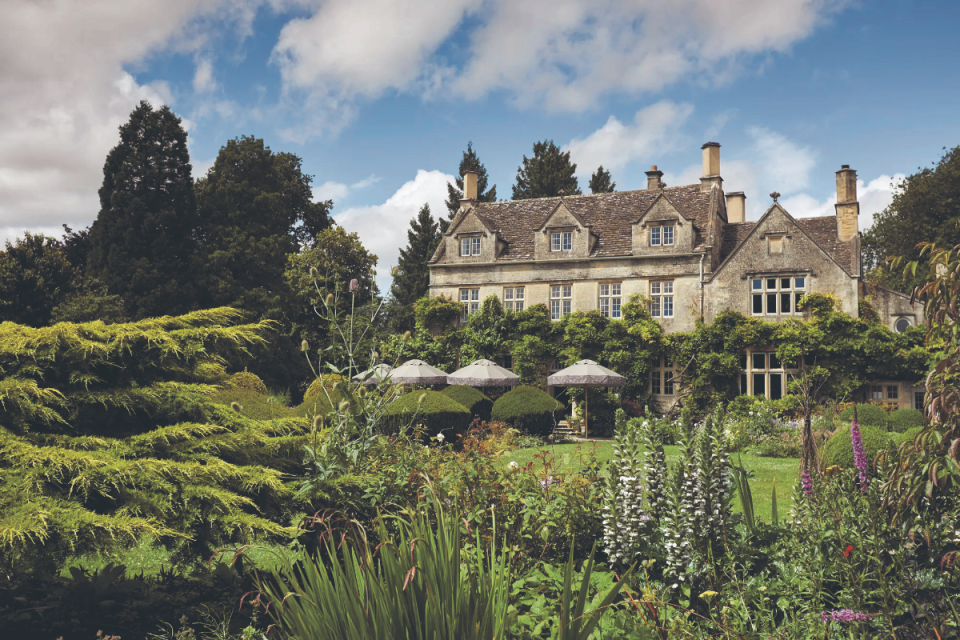
The Pig, in the village of Barnsley, near Cirencester, opened just over a year ago. It occupies the former home of landscape designer Rosemary Verey, who designed gardens for Prince Charles and Elton John. She was quite the character: the formidable gardener would rip up visitors’ tickets if they criticised her designs. Two gargoyles still standing in the garden had their necks twisted so Verey could see their faces from the house.
Spectacular gardens
The garden is free to visit even if you aren’t an overnight guest. The spectacular feature is looked after with funding from the hotel after it fell into disrepair following Verey’s death in 2000. It is an example for how money from luxury hospitality can help sustain the area’s natural beauty. Lady Bamford, too, has charitable foundations and partnerships focused on underprivileged people in India and the UK.
The Pig has held B Corp status for a decade, a sustainability benchmark awarded to only 18 UK hotels as of 2025. As for the property, the Grade II listed 1700s building features a restaurant and bar, snug with fireplace and an underground reading room.
The bedrooms feature original floorboards, vintage artworks and old-fashioned writing desks. “We want you to feel like you’ve gone to stay with Aunt Rosemary for the weekend,” is the line staff regurgitate. A-listers are regular occurrences. “We’re very used to having celebrities staying. It’s probably because of how we treat them: just like everyone else.”
It’s difficult to imagine this setting being a front on a culture war
Back at the Farmhouse, situated in an outdoor copper bathtub positioned on decking above a whimsical stream, it’s difficult to imagine this tranquil spot being a front on a culture war that encompasses ideas of class, wealth, progress and conservation. A kite turns figure-eights in the sky while I turn these ideas in my mind.
Perhaps the difference between Soho Farmhouse and Daylesford (who declined to comment for this story) is one of scale and ambition. Soho Farmhouse laid out its proposition over a decade ago, on private farmland, and hasn’t looked to extend since. It’s the same with The Pig.
Daylesford, on the other hand, seems intent on owning every quaint old property in the area. Each acquisition paints a fresh target upon Lady Bamford’s empire.
As the sun begins to set over the ancient trees, bathing everything in a golden, fairy-tale hue, I can see why she’s so keen to snap it all up.
#Kim #Kardashian #ruined #vibe