
| Updated:
Fifteen years ago, Tim Cook inherited a $350bn tech company that had just lost one of the most celebrated chief executives in corporate history. On Monday, he handed it on worth $4 trillion.
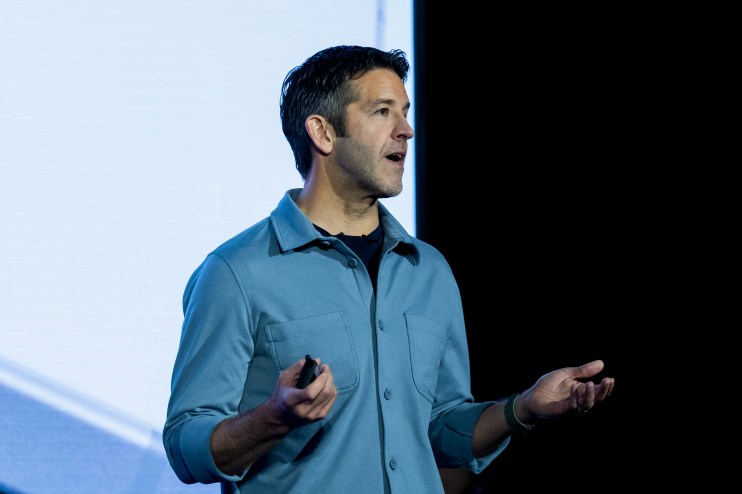
Cook will step down as Apple’s chief executive on 1 September 2026, with John Ternus, the company’s hardware engineering chief and a 25-year Cupertino veteran, stepping up to succeed him.
Cook, the company’s announcement said, will move to executive chairman, focusing on engagement with global policymakers – a tell tale of just how much of his tenure was spent navigating the tech behemoth’s relationships in Washington and Beijing.
During his stint at the helm, market capitalisation grew more than 10-fold, and revenue quadrupled from $108bn to $416bn.
From Airpods to the Apple Watch, the tech executive oversaw the introduction of some of Apple’s most successful products. And the services business he built from nothing, including Apple Pay, Apple Music, Apple TV, now generates more than $100bn annually.
Former chief financial officer Peter Oppenheimer said this week that Cook had stepped into the biggest shoes imaginable and worn them well.
However, the picture starts to look a little less rosy when it comes to AI, a space in which Apple has trailed Microsoft, Alphabet and Nvidia in the past two years.
After its annual WWDC 2025 event, Apple was criticised for AI demonstrations that never reached users as promised. Siri’s overhaul has slipped repeatedly. And Apple was forced to ink a partnership with Google simply to meet near-term expectations.
Cook, it seems, is leaving his successor a strategic problem that accumulated on his watch, even as everything else he built continues to perform.
Apple welcomes Ternus
Ternus appears to be a credible choice, both on paper and in practice.
He joined the iPhone maker in 2001, led the company’s major chip transformation, and oversees the hardware responsible for the majority of Apple’s revenue.
Gil Luria at DA Davidson told Reuters his appointment signals a push into new hardware categories like foldable phones, smart glasses, AI-powered devices.
Feted tech analyst Dan Ives also backed him as the right successor but acknowledged investors would have more questions than answers about the broader strategic direction.
Even Sam Altman, founder and boss of AI darling OpenAI, posted on X: “Tim Cook is a legend. I am very thankful for everything he has done and I am very thankful for Apple.”
But the more telling move on Monday was one that attracted considerably less attention.
Johny Srouji was promoted to the newly created role of chief hardware officer, giving him oversight of Apple Silicon, hardware engineering and the full chip roadmap under a single remit for the first time in over a decade.
Srouji built the neural engine inside every recent iPhone, iPad and Mac, and led the transition away from Intel processors.
Creating a new executive role and announcing it alongside a chief executive succession signals where Apple believes the next phase of competition will be decided.
Ternus and Srouji have worked alongside each other for 15 years and now sit together at the top of the organisation.
WWDC 2026 in June will be Ternus’s first major public moment before he formally takes over in September, and Apple has referenced AI explicitly in its transition communications for the first time.
#John #Ternus #Introducing #Tim #Cooks #heir #Apple