
| Updated:
Italy’s latest attempt to claw back tax from Formula 1 drivers and teams is being framed as a crackdown on evasion. In reality, it looks far more like a system struggling to keep up with the modern sport it is trying to regulate.
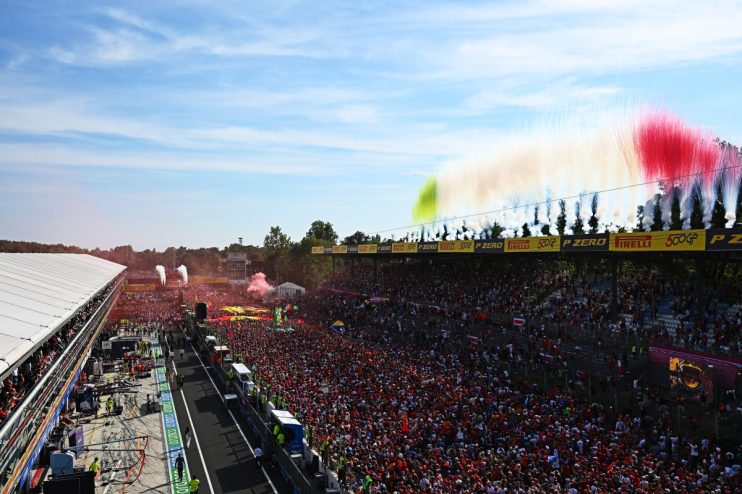
Authorities are reportedly looking to audit teams and drivers retrospectively between 2020 and 2024, focusing on income linked to just a handful of races held on Italian soil.
But this raises a simple question. If you are dealing with one of the most scrutinised industries in the world, advised by the best financial advisors money can buy, what are the odds that everyone has been getting it wrong? It is far more likely that the system itself is no longer fit for purpose.
International tax law for athletes and entertainers has always been complex. Much of it is built on outdated OECD (Organisation for Economic Co-operation and Development) models designed decades ago when income streams were simpler, costs were lower, and the idea of a globalised sport with 24 races across multiple continents did not exist.
Formula 1 reality
Today, a Formula 1 driver is not just a driver. They are a multinational corporation whose marketable assets and services rely entirely on a single individual’s sporting ability, as well as personality, background, geographical location, lifestyle choices, tastes and even their personal and family connections.
The difficulty lies in how multiple jurisdictions attempt to assert taxing rights over overlapping slices of that income, each applying its own rules on what is taxable and what is deductible, often in ways that favour domestic interests. Disputes obviously arise. The idea that income can be neatly apportioned and taxed according to where a race physically takes place is, at best, theoretical. At worst, unfeasible.
For example, if a British driver paid by a Japanese sponsor does their social media post while in Italy – where is that income generated? Where should it be taxed? And how do you apportion the costs that support it? There is no clean answer and there never has been.
Tax authorities are now trying to apply legacy rules to a commercial reality that has moved on. That is where the friction sits. When Italy attempts to retrospectively reassess four years of activity, it is not addressing tax evasion; it is exposing the limitations of its own framework. You cannot expect clarity from rules that were never designed to handle this level of global complexity.
Playing catch-up
You cannot rewrite the interpretation of those rules after the fact. Retroactive enforcement is counterproductive and sends a message to teams and investors that the rules of the game are not stable.
Formula 1 is a global sport with options. Circuits compete for races, and jurisdictions compete for talent. If operating in a country becomes more administratively burdensome and legally uncertain, you go elsewhere. In the UK, HMRC has taken an increasingly granular approach to F1 taxation, pushing into areas that begin to blur the line between legitimate oversight and personal privacy.
The return on that level of enforcement is marginal, but the signal it sends is clear. Governments are under pressure to generate revenue. What is new, however, is the scale and mobility of the industries they are trying to tax. Italy has also spent years offering favourable tax treatment to attract high-net-worth individuals so it is not surprising that authorities are now looking for ways to claw revenue back.
Formula 1 operates across 24 races with multiple jurisdictions and overlapping commercial structures – even the most experienced advisers will encounter areas of ambiguity.
Don’t attribute to malice what can be explained by ignorance. It is difficult to accept that the entire F1 industry, supported by highly specialised advisors who have been doing this for years, have collectively misunderstood the rules.
If Italy wants to maximise revenue and improve compliance, the solution is modernisation. It is aligning tax policy with the way the sport actually operates today.
Otherwise, this becomes a very expensive exercise in chasing the wrong problem.
Oriana Morrison is founder of tax advisory ECNMX
#Italy #risk #driving #Formula #misguided #tax #raids