
| Updated:
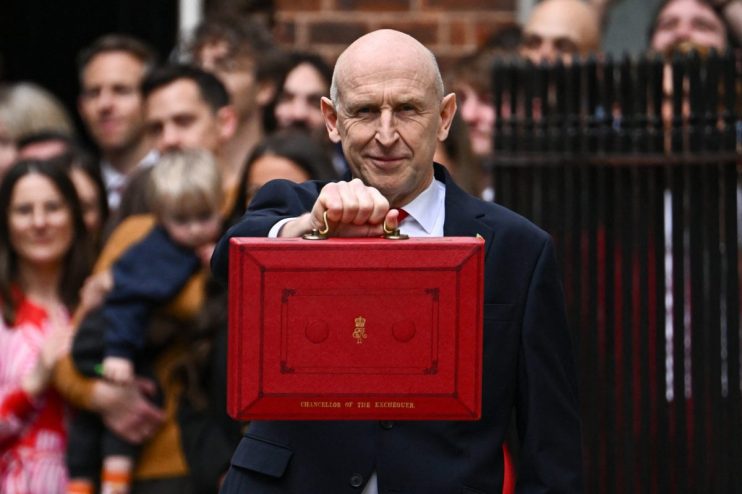
There was a mixture of dismay, exasperation and righteous indignation in the Scotch whisky industry when, in his first Budget as chancellor last Wednesday, John Healey ignored longstanding pleas for a fairer approach to excise duty on spirits.
The Scotch Whisky Association’s CEO Mark Kent, said afterwards: “Another increase – the fourth in as many years – will see the tax burden on the average bottle of Scotch Whisky rise to 74 per cent… We’ve repeatedly warned that increasing the spirits super tax will not only pile further costs on distillers, but will harm the supply chain and reduce Treasury revenue. Nobody wins when hard-pressed businesses are taxed to the hilt.”
It was Rachel Reeves, Healey’s predecessor as chancellor, who in her 2024 Autumn Budget, decided to raise alcohol duty in line with RPI inflation – sometimes called “standard inflation uprating” – at the same time as cutting duty by 1.7 per cent for qualifying on-trade draught products to support public houses.
In principle, it was marginally preferable to the RPI-plus-2 per cent “alcohol duty escalator” that was introduced by Chancellor Alistair Darling in 2008, and scrapped by his successor George Osborne in 2014.
However, the duty uprating was also linked to the strength-based alcohol duty system brought in by the Conservatives. Rishi Sunak first proposed this as chancellor in 2021, and it took effect in August 2023.
Last Wednesday, Healey left a bitter taste for the industry when he quietly (he didn’t actually announce it in his speech) left the legacy system in place, with the Treasury confirming in accompanying documentation that, from 1 February 2027, spirits duty will be raised by 4.55 per cent – which the SWA says equates to a cumulative 24 per cent over the past four years.

The “small producer relief” scheme mentioned by Healey, which provides tax relief to smaller beer and cider makers, has no impact on Scotch, as it applies only to products with ABVs of more than 8.5 per cent.
The SWA’s director of strategy and communications, Graeme Littlejohn, believes Burnham’s government is shooting itself in the foot. “There have been five forecasts since Labour came to power – and alcohol revenue has seen significant downgrades. Even today, alcohol revenue was revised down by £1.1bn between 2026/27 and 2030/31, and that is just since the forecast in March. So, while the government is increasing duty by 4.55 per cent it’ll bring in less revenue.”
The way spirits are taxed in the UK has also come under fire in the Scottish Affairs Committee’s ongoing inquiry “Scotland’s whisky industry: Tariffs, trade and growth“.
In evidence to the inquiry, the UK Spirits Alliance said: “The UK has the highest rate of excise duty in the G7 and amongst the highest in Europe. This penalises consumers, constrains investment, and puts distillers under severe pressure. The government must cut excise duty and ensure no further widening of the duty gap between spirits and other alcohol categories.”

In 19-pages of evidence to the Scottish Affairs Committee’s inquiry, the SWA said “Scotch Whisky is paying about 1.7 times the duty per litre of alcohol paid by draught beer… The UK government should reform ‘draught relief’ so that spirits like Scotch whisky are not excluded in practice from support available to other alcohol categories in the on-trade.”
Extended producer responsibility
Whisky firms have plenty of other reasons to be peeved with the public sector’s lack of support at the moment – over and above UK intransigence on tax.
In its submission to the committee’s inquiry, Chivas Brothers highlighted the Extended Producer Responsibility packaging scheme as “profoundly unfair to Scotch whisky producers,” predicting that as currently framed the EPR will lead to the closure of some, if not all, of the UK’s glass bottle manufacturing plants.
The SWA chipped in, saying the UK has “the highest glass EPR fees in Europe, costing the Scotch whisky industry millions of pounds every year.”
Deposit return schemes
The £ 7bn-a-year Scotch industry is also pretty frustrated that the deposit return scheme (DRS), due to be introduced across the UK from October 2027, will end up being inconsistently rolled out, since glass is currently going to be included in Wales but nowhere else.
In its written evidence, Chivas said: “A Wales-only glass deposit return scheme, would create a major trade barrier within the UK, undermine supply chains, and incentivise fraud. Many Scotch whisky producers will be forced to withdraw from the Welsh market entirely.” The Wine & Spirit Trade Association predicts if nothing changes there will be a mass exodus of whisky and other spirits brands from the Welsh market, with an estimated 90 per cent of SKUs disappearing from shelves in the principality.
International trade, tariffs, and regulatory alignment
Trade bodies and distillers providing written evidence to the Scottish Affairs Committee inquiry were much more effusive about the UK government’s recent achievements on the international stage. Indeed, many thanked it for successes such as persuading China to halve tariffs on Scotch from 10 per cent to 5 per cent (effective February 2026), the US’s removal of its 10 per cent tariff on Scotch imports (effective July 2026), and the UK-India Comprehensive Economic and Trade Agreement (effective July 2026).
However, whisky players are warning the government against complacency in the international arena, especially given recent trade deals negotiated by the EU. Chivas Brothers warned EU-based drinks firms are likely to be placed at an advantage over the UK thanks to recent deals sealed by EU trade commissioner Maroš Šefčovič.
“The EU has implemented a trade deal with Mercosur (a £190m market for Scotch) that will see Irish whiskey paying zero tariffs by May 2030. The EU is also pressing ahead with negotiations with the UAE, the Philippines and Thailand. The UK government should pursue an ambitious trade agenda that seeks to maximise access to markets globally, ensuring that Scotch is not at a disadvantage compared to EU spirits.” Current members of Mercosur – the South American trading bloc founded in 1991 – include Argentina, Brazil, Paraguay, Uruguay and Bolivia. In its submission, the SWA said members would like to see “targeted and agile trade agreements” bringing tariff removal and more frictionless trade with growth markers including Thailand, Mercosur, UAE and Indonesia.
It won’t please the SWA’s former boss David “Frostie” Frost – who went on to be Boris Johnson chief Brexit negotiator and is today an ardent Brexiteer and unaffiliated member of the House of Lords – but the SWA also wants greater regulatory alignment between the UK and the EU.
In its evidence to the MPs, the Edinburgh-based industry body said the UK government should “consider unilaterally mirroring EU regulations domestically on a case-by-case basis where this would usefully create consistency for businesses.”
Ian Fraser is a financial journalist, a former business editor of Sunday Times Scotland, and author of Shredded: Inside RBS The Bank That Broke Britain. This content has been produced for Whisky Business in collaboration with WhiskyInvestDirect, the Scotch whisky trading platform for distillers, independent bottlers, and private investors.
#Scotch #whisky #industry #government